
Ivory Jiwari
One day, a good old friend brought along an old and damaged billiard ball. It happened to be a real ivory specimen.
Why not to try to make a ghodi out of it ?
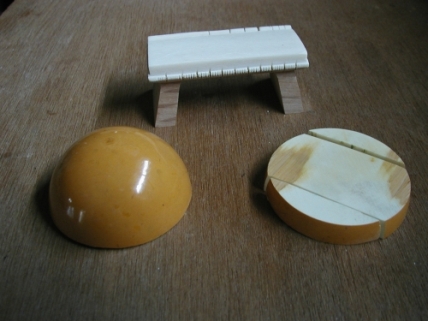
First step is to cut out a nice slice of ivory…
…new… SAS-01 …new…
Day 40 is another happy day: after the successful second glue-session, the body of this new sitar is complete. This one I baptise SAS-01, Semi Acoustic Sitar.

Once more,…glueing
Day 39: the big glueing, ctd… The soundboard as well as the fretboard has been glued at once. This means a day less to dry.
Carving of the top plate
Day 38 : Carving of the last soundboard. Follow the different steps… Drawing the zones to be carved, drilling holes, carving the holes,… until the holes are gone…
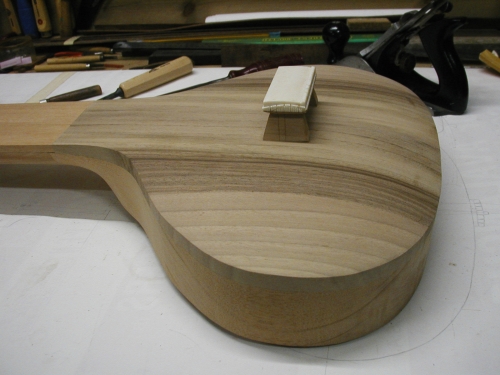
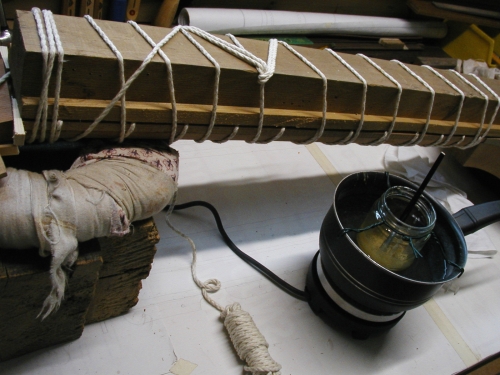
The soundboard
Day 30: Modelling the first soundboard. This is the result, after a first rough cutting and sanding session.
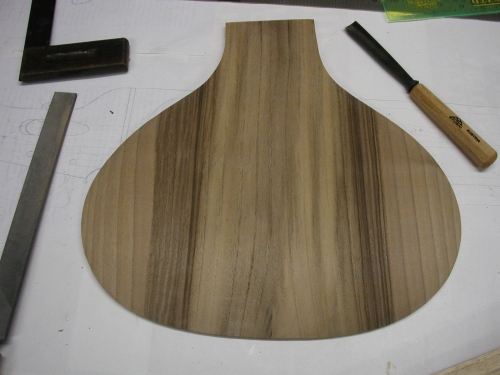
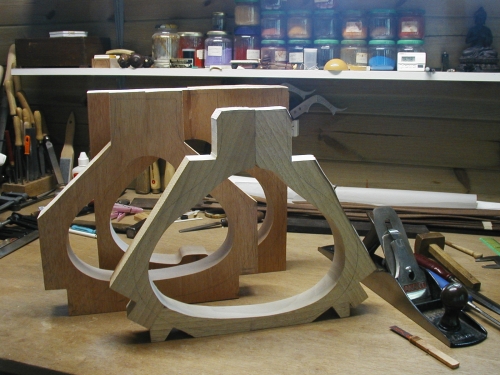
Body sides are ready
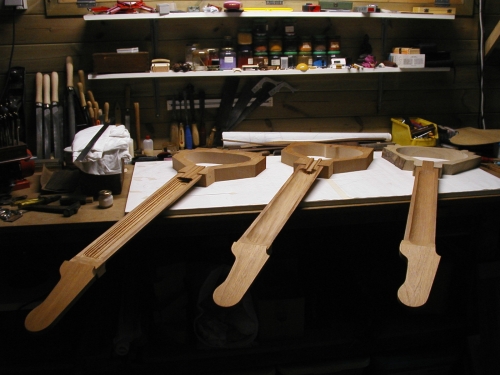
Day 26: Finishing the joint, making it equal to the height of the body sides and inserting an acoustic pipe between the neck and the soundbody.


The joint
Talking about a joint here means the connection between two different wooden parts of the instrument: the neck and the body. It is a very important item covering strenght and stability. The body is tilted 4° backwards and 2° downwards according to the neck’s axis. This doesn’t make it more easy.
How to make a mizrab, the translation
Here is the translation of “how to make mizrab” section taken from an old “teach yourself sitar” manual. Or, try this alternative animated demonstration .