

Saraswati Veena bridge repair
When Archana Kumar contacted me from Germany, she was worried about her beloved Saraswati Veena. A student of Smt. Sujana Vadlamani in Chennai, she regularly performs at local Tyagaraja and Dikshitar concerts. But recently something had changed. “The notes are not exactly right and I really need help to…

Buddha Systems in Hiren Roy
Engineer and passionate sitar player Ashok Nair has been making excellent pickup systems for sitar and other acoustic musical instruments for several years. They are sold under the name Buddha Systems and are now used by many well-known musicians worldwide. Matyas Wolter is one of them and has been…

Kabul 1900 sitar restoration – Pt2
In a first part, you can learn about this particular ancient instrument, baptised the Kabul sitar, and read a description of how to check and repair the body and make the missing wooden parts. At that time, it was already clear that other important parts were also missing: at…

Intonation blocks
Intonation on the sitar (& surbahar) is a very complex aspect for players to master due to its unique structure and intricate tuning system. Unlike Western stringed instruments with standardized frets, the sitar’s pardas (frets) are movable, allowing players to adjust the intervals between notes to suit different ragas…

Juma Mankas
I’ve made a set of mankas and one tarav ghoraj for Zach Ferrara. They are made out of golden dragon snake Juma® blocs. Juma® – the name stands for independently developed and very modern processing material made from a mixture of various mineral base materials, bound in a resin…
Rudra Veena repair
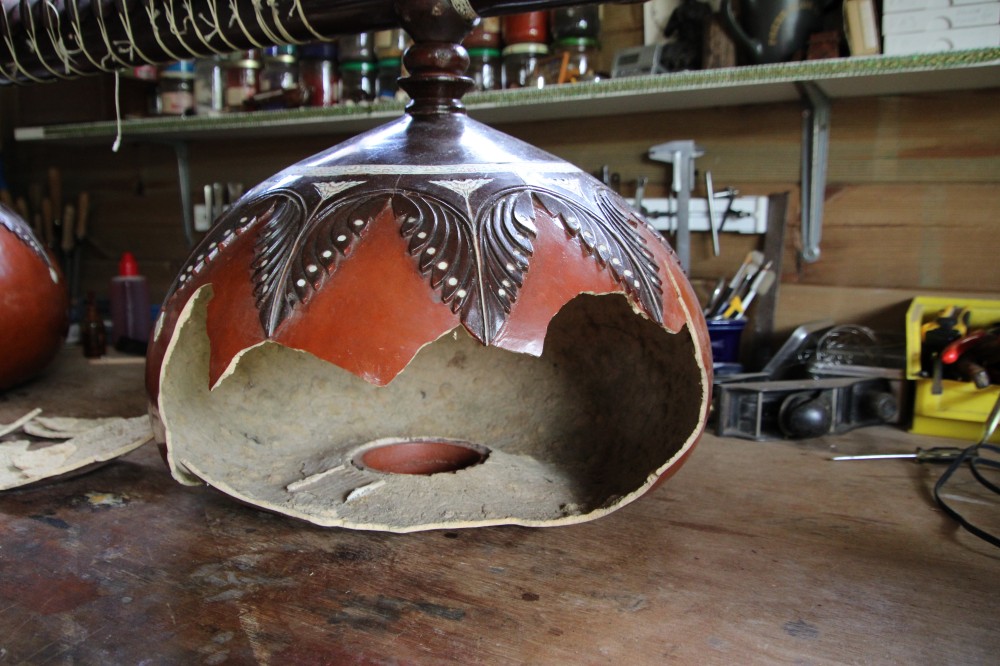
This anonymous rudra veena was found by my friend Guillaume CZLT in Bombay Pekin Bruxelles, a shop for second-hand furniture in Brussels. It was quite badly damaged. One of the tumbas was badly broken, the main bridge had been torn off and lost, and all the frets had been…
Hiren Roy 70’s refurbish
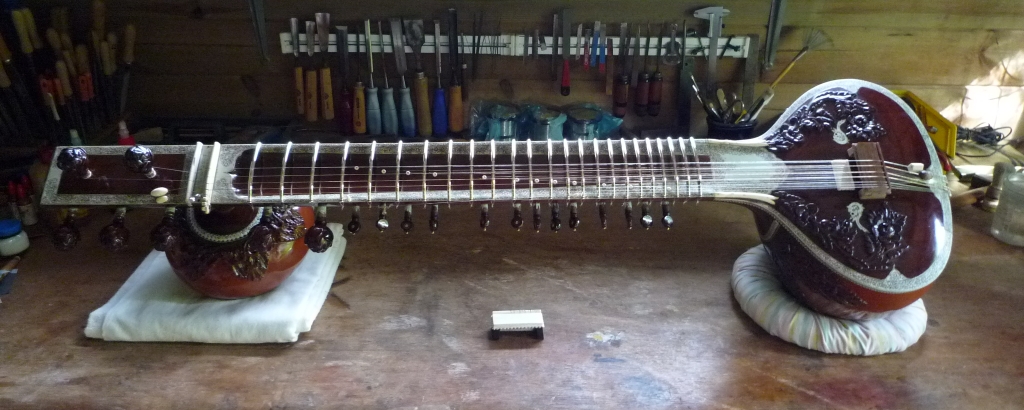
Hiren Roy 70’s refurbished… Peeling tumba & crack repair with color change… New jawari ghoraj mounted… Dieter Zarnitz jawari ghoraj with Cumaru top & Angelim Amargoso feet installed. Pardas added… Added RE komal & DHA komal, 23 pardas in total.
More Dieter Zarnitz ghoraj
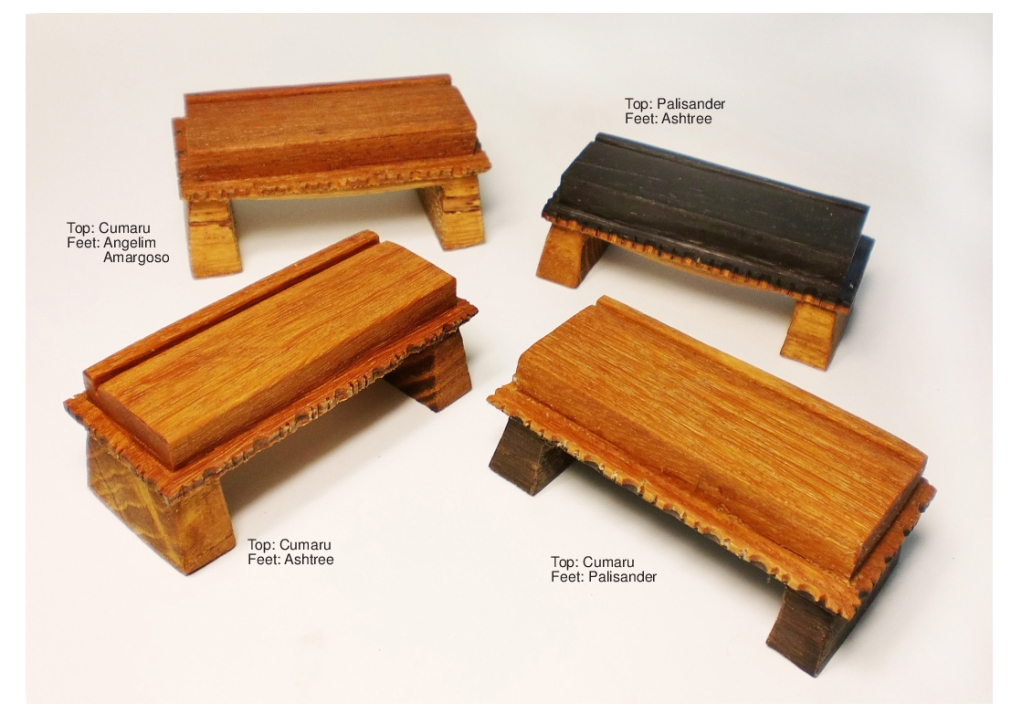
A new set of ghorajs made by Dieter Zarnitz. The wood comes from leftover pieces of a construction. “Cumaru” is a very fine, hard and durable construction-wood. “Angelim Amargoso” is very heavy and rougher than Cumaru. Both grow in South America. The colour you see is the natural one.…
Dagar Tanpura
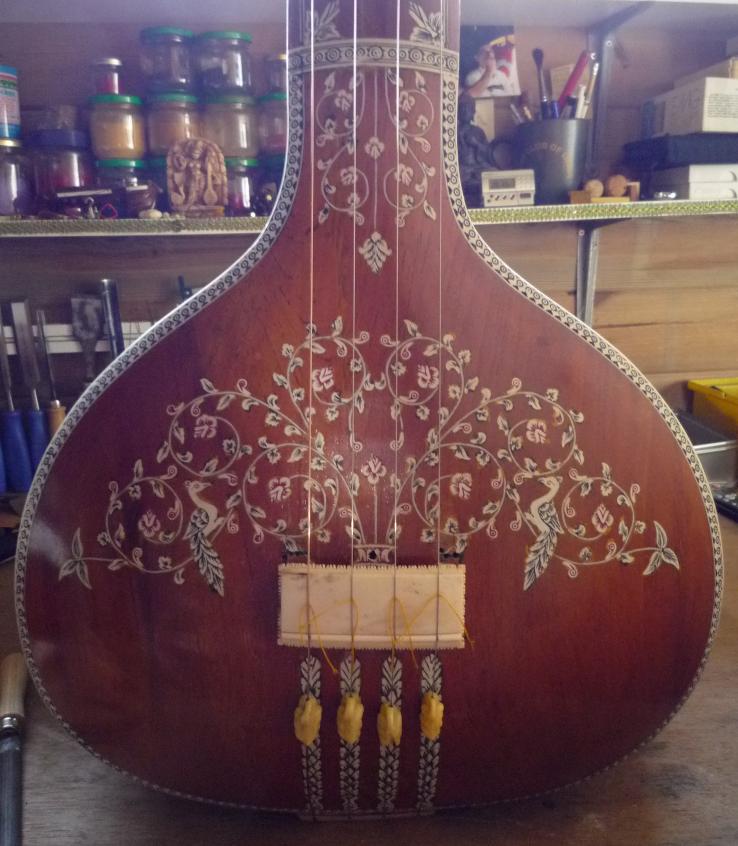
Ud H. Sayeeduddin Dagar, a great dhrupad singer, cousin uncle from the legendary Dagar brothers, frequently visits Belgium for concerts and teachings. Because travelling with big tanpuras is not easy and not without risk, Dagarji has kept a couple of them here resident for this purpose. Recently, a huge,…
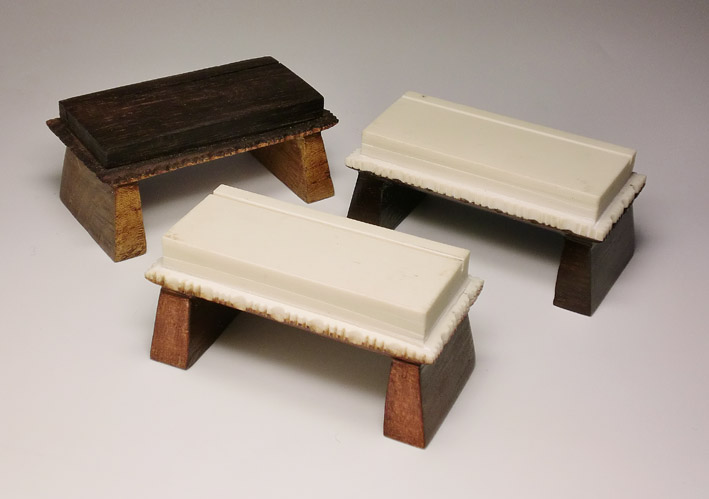
Dieter Zarnitz ghoraj
These ghorajs are made by Dieter Zarnitz. He has copied the Barun Roy and Hari Chand style exactly. The feet are from maple or rosewood, the tops out of snakewood, rosewood or Elforyn™. The setting (“jawari“) can be done at the Sitar Factory (Belgium).
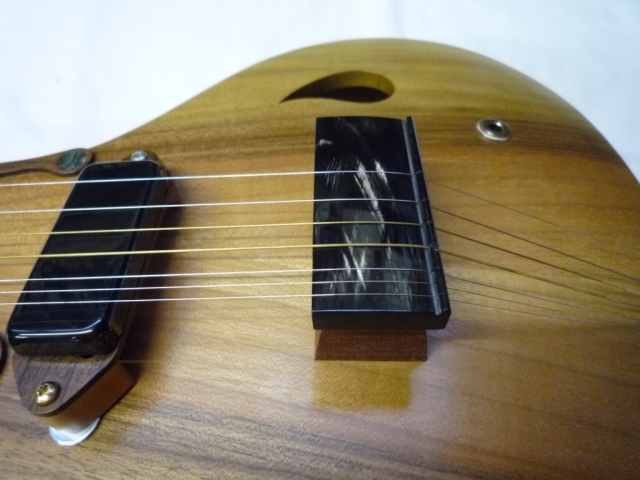
SAS-01 “Black buffalo” edition
Since the good old stagghorn becomes more and more rare, we are in constant seek for a valid alternative. One of the contenders is the black buffalo horn. Buffalo horn plates are used as material for engraving, for pocket knives, tang blades and japanese cooking knives. The plates are…
Dead notes
Dead notes on sitar In music, a ghost note, dead note, or false note, is a musical note with a rhythmic value, but no discernible pitch when played. On stringed instruments, this is recognised by the sound of a muted string. Muted to the point where it is more…