SAS-01, The Jazz Sitar
Day 60: Same story as with the semi-acoustic guitar avatar. Many archtop guitars are equipped with a decent pickup. So, I choose to try on this sitar a very slim but warm sounding pickup model Slimbucker™ Jazz made by famous american pickup maker Kent Armstrong. This sitar sounds very…
SAS-02 body completed
Day 57: Back to body 3: Glueing the neck front plate and tabli to the body using hot glue. Another delicate job… When glueing the tabli, I used profiled plates to keep the klemsia’s in place. This works a bit more comfortable in stead of using a rope. Day…
SBS-02, with Lipstick pickups
Day 55: I mounted 2 single coil Seymour Duncan – Lipstick model pickups and tried out various combinations. One pickup is reverse winded and reverse polarised, creating thus a humbucking combination which gives less distortion and less noise. The potmeters in front offer volume and tone control while a…
SAS-01, with taravbar
Day 53: Assembling the body after sufficient drying (pardas, cikari- and tarav machine heads, jiwaris & strings). Day 54: Mounting the cikari pins and strings, and doing jiwari. Mounting the taravs and tarav jiwari. Now this semi-accoustic sitar is ready for a first play. Who wants to … ?

Tarav strip
Day 50: Mounted all 24 pardas on this SAS-01. It’s a very delicate and time-consuming job: first accurate bending and height adjustment followed by binding the pardas. Day 51: After tuning the sitar properly, I put the pardas to their regular position. Then I draw a map, localizing the…
Soundholes
Yesterday I took an exciting decision: drill soundholes, or not …??

Meanwhile there are even some pardas mounted.
Assembling the SBS-02
The assembly of the body is now complete with strings and frets. Finally to be followed by installing the pickups and electronics … Day 46: First mounted the patri (comb), langoot (tail mount) and 5 main machine heads. After putting the jiwari the strings could be placed, followed by…
Finishing the body
We have now arrived at a final stage. The whole body of SBS-02 is nearly ready for assembly …
Transition
meanwhile, just a taster…
Parda lanes
Here we go again …
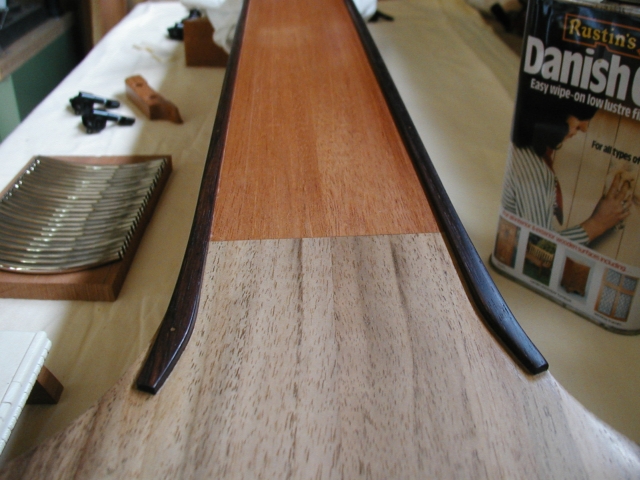
Day 41 en 42: Making and glueing the parda lanes. These are long and thin strips located on the sides of the neck to hold the pardas.