
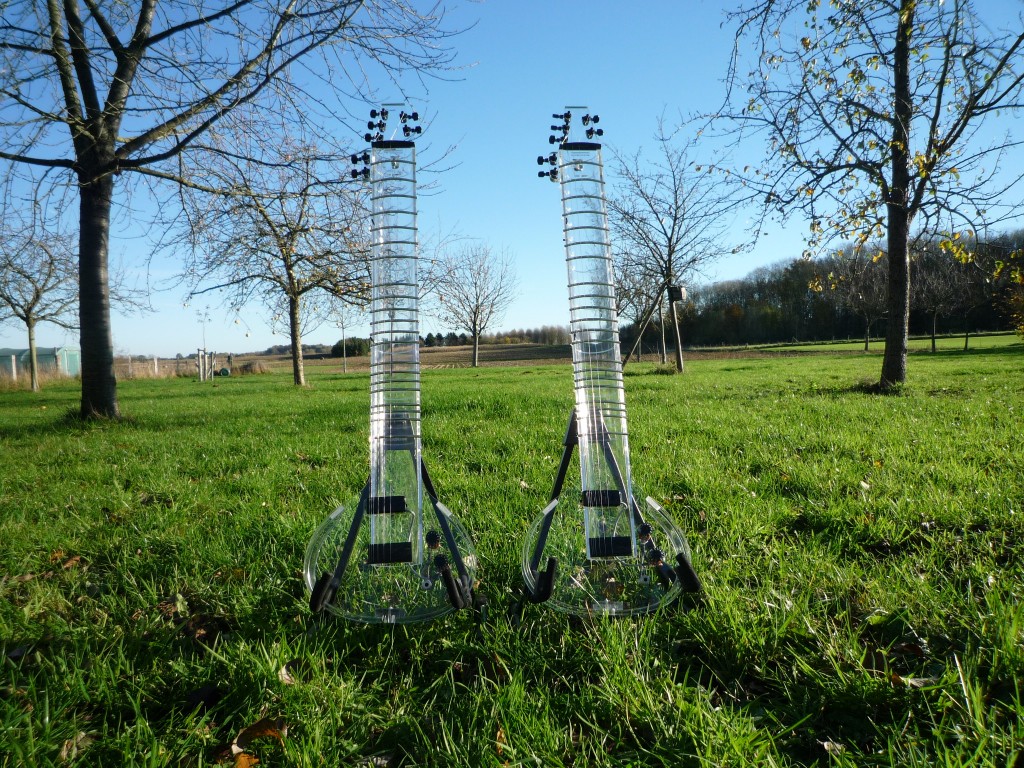
2 more Plexitar sitars
This year I’ve completed 2 plexiglass sitars. They are 100% See-Tar cloned replicas according to the original Purbayan Chatterjee copy as seen here on this site. Plexiglass sitar Sound sample: Comes with a solid AUER CP 12416 Protective case Pro with locks & wheels in beautiful “blutorange” (vermilion) color.
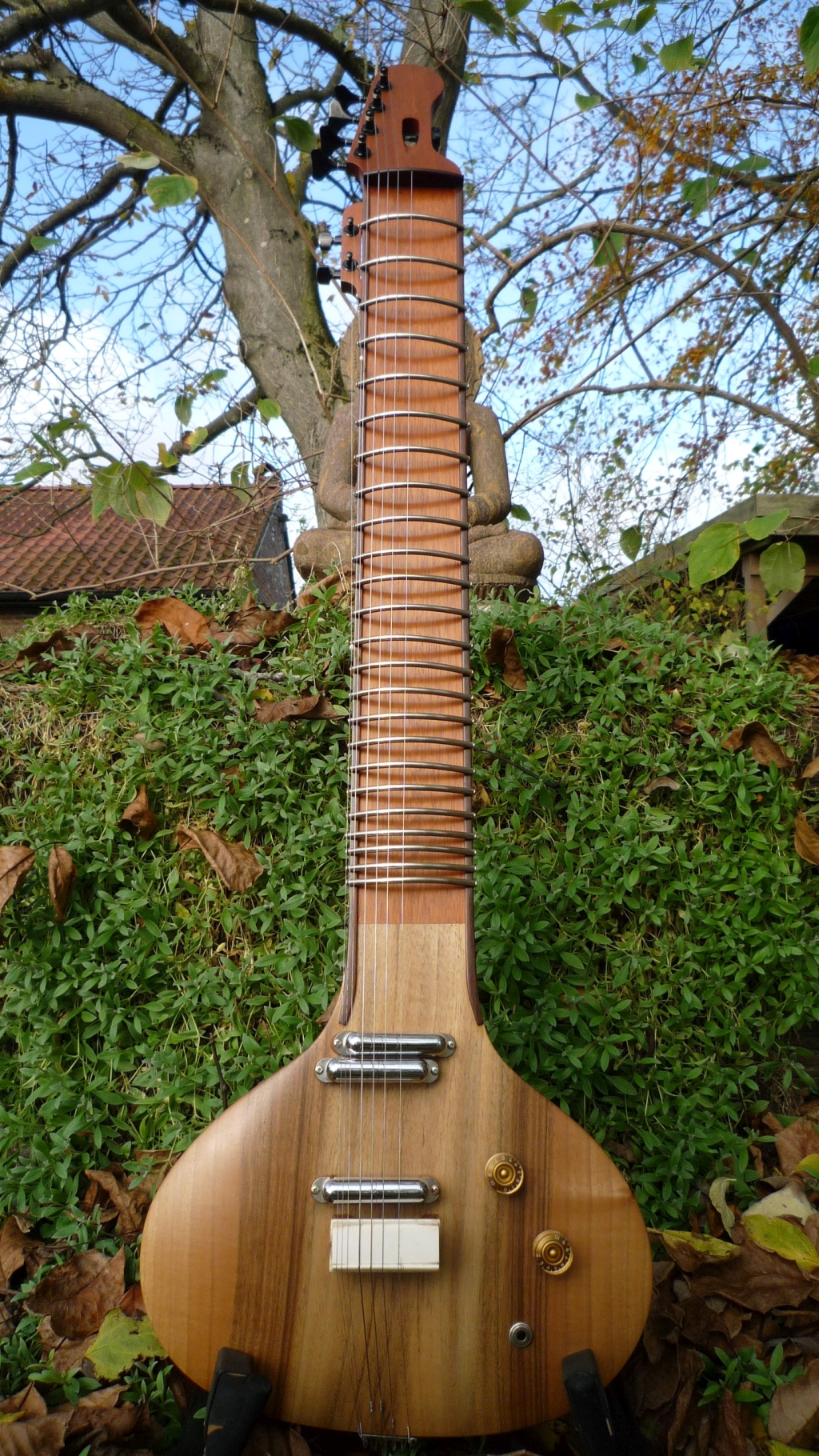
SBS-02, with 3 Lipstick pickups
I have improved the sound of my solid body sitar SBS-02. I added one Lipstick ‘bridge’- pickup to the combination. The earlier 2 ‘neck’-pickups can be switched in parallel or in series and now smoothly be mixed with the additional ‘bridge’ pickup by means of one of the pot-meters.…
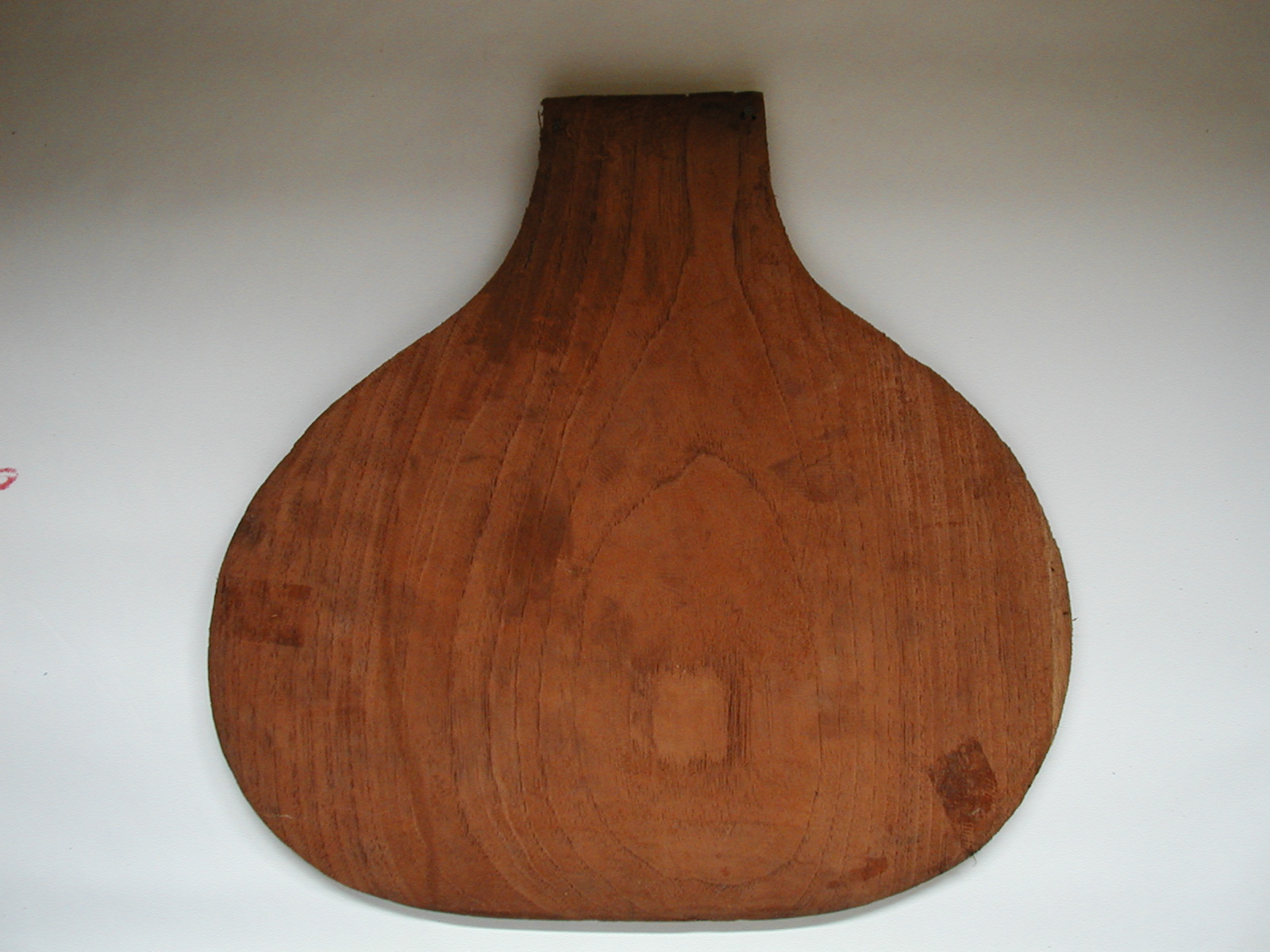
Tabli Info
Dear friends, please hereby find some info about different styles of tabli. Clicking on the pictures will show up a drawing presenting the thickness (in mm) on different locations of the tabli and a zoom showing details of the surface finishing on the backside. Notice the increased thickness at…
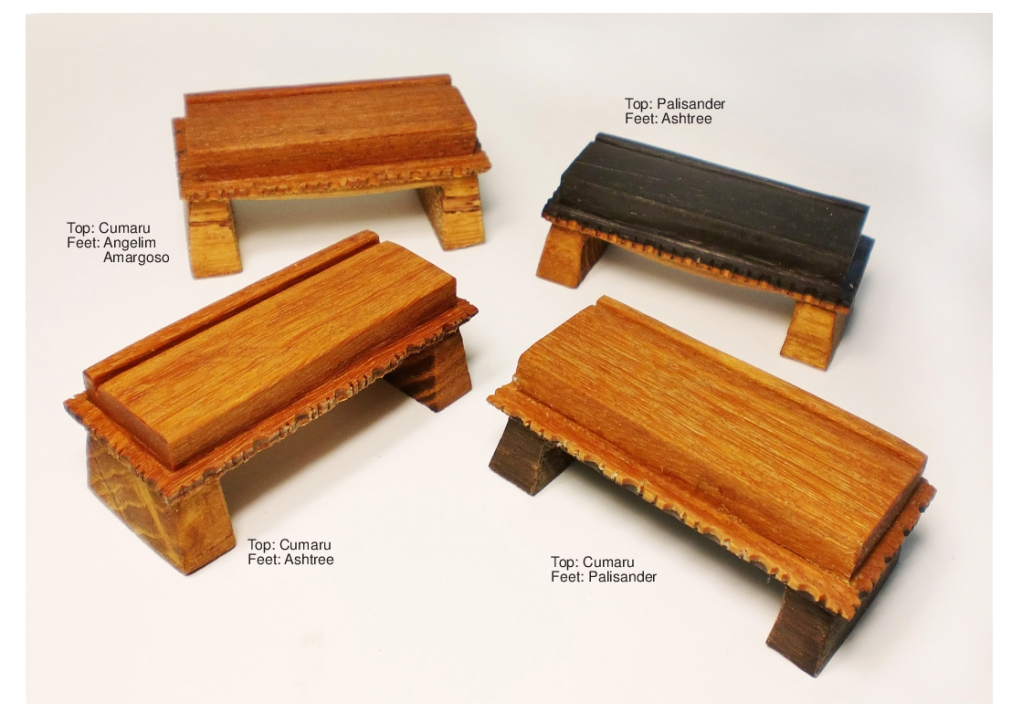
More Dieter Zarnitz ghoraj
A new set of ghorajs made by Dieter Zarnitz. The wood comes from leftover pieces of a construction. “Cumaru” is a very fine, hard and durable construction-wood. “Angelim Amargoso” is very heavy and rougher than Cumaru. Both grow in South America. The colour you see is the natural one.…
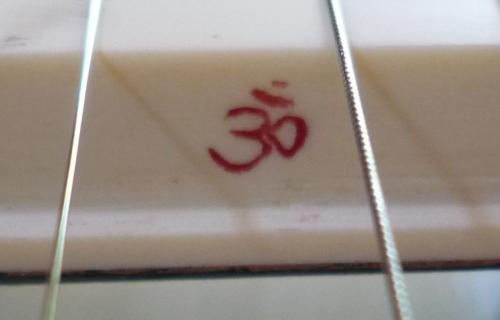
Engravings on Elforyn
Elforyn™ is a modern synthetic ivory substitute and can easily be engraved. The technique is identical to traditional decorative engravings on real ivory, bone, celluloid and plastics. You only need a “pencil” with a hard and sharp end, coloured wax and a scraper. The pencil can be made out…
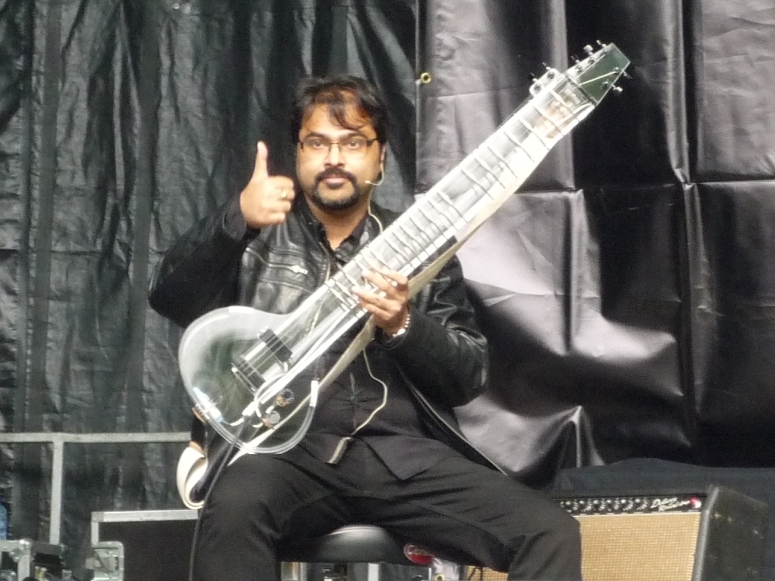
The See-Tar
Last week Friday, 19/06/2015, I’ve delivered this electric plexiglass sitar to Purbayan Chatterjee. One year has passed since he had asked me to build this instrument for him (May 2014). Initially I found it a weird idea and honestly, I didn’t favour the choice of plexiglass because of the…
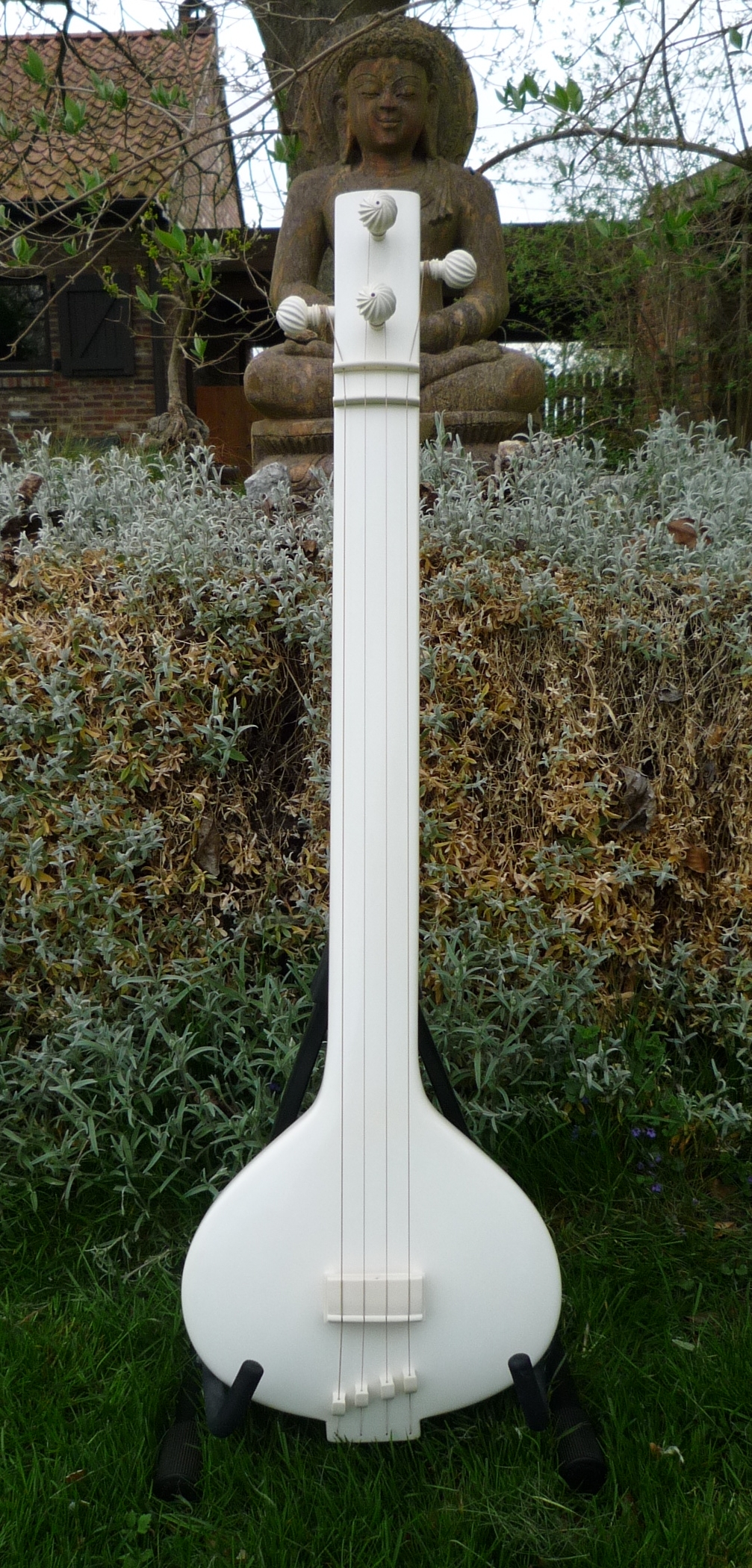
White Tanpura
Inspired by the white sitar mod i’ve painted this tanpurabody also in white using Bio Pin™ waterbased organic white paint and Colortone™ high gloss waterbased finish. The patri, jawari and mankas are all made from Elforyn™, a modern synthetic ivory substitute. So also this one became a real “organic…
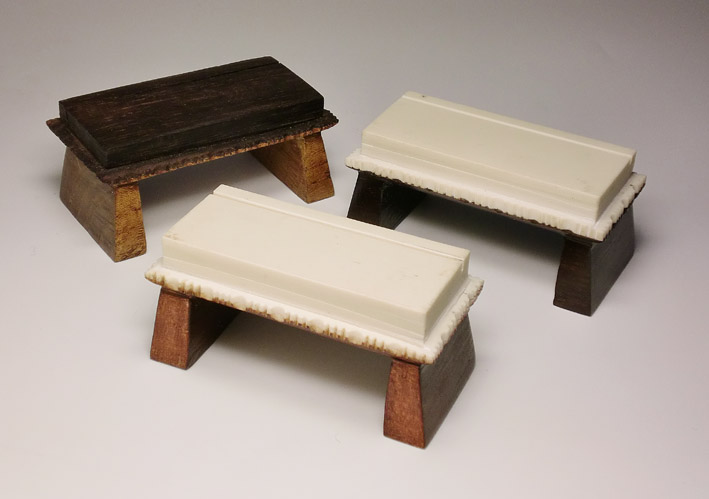
Dieter Zarnitz ghoraj
These ghorajs are made by Dieter Zarnitz. He has copied the Barun Roy and Hari Chand style exactly. The feet are from maple or rosewood, the tops out of snakewood, rosewood or Elforyn™. The setting (“jawari“) can be done at the Sitar Factory (Belgium).
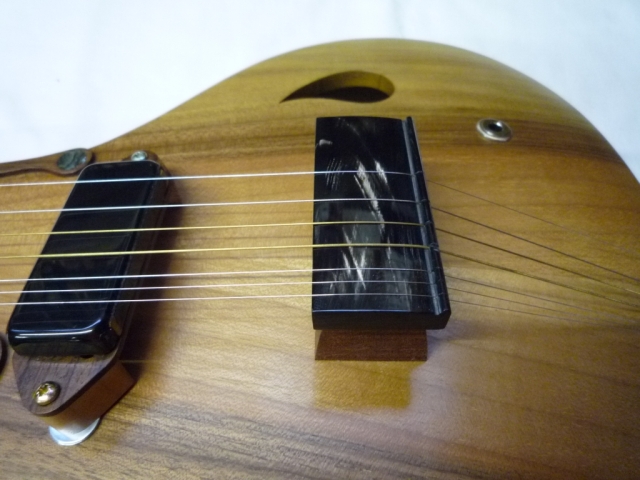
SAS-01 “Black buffalo” edition
Since the good old stagghorn becomes more and more rare, we are in constant seek for a valid alternative. One of the contenders is the black buffalo horn. Buffalo horn plates are used as material for engraving, for pocket knives, tang blades and japanese cooking knives. The plates are…
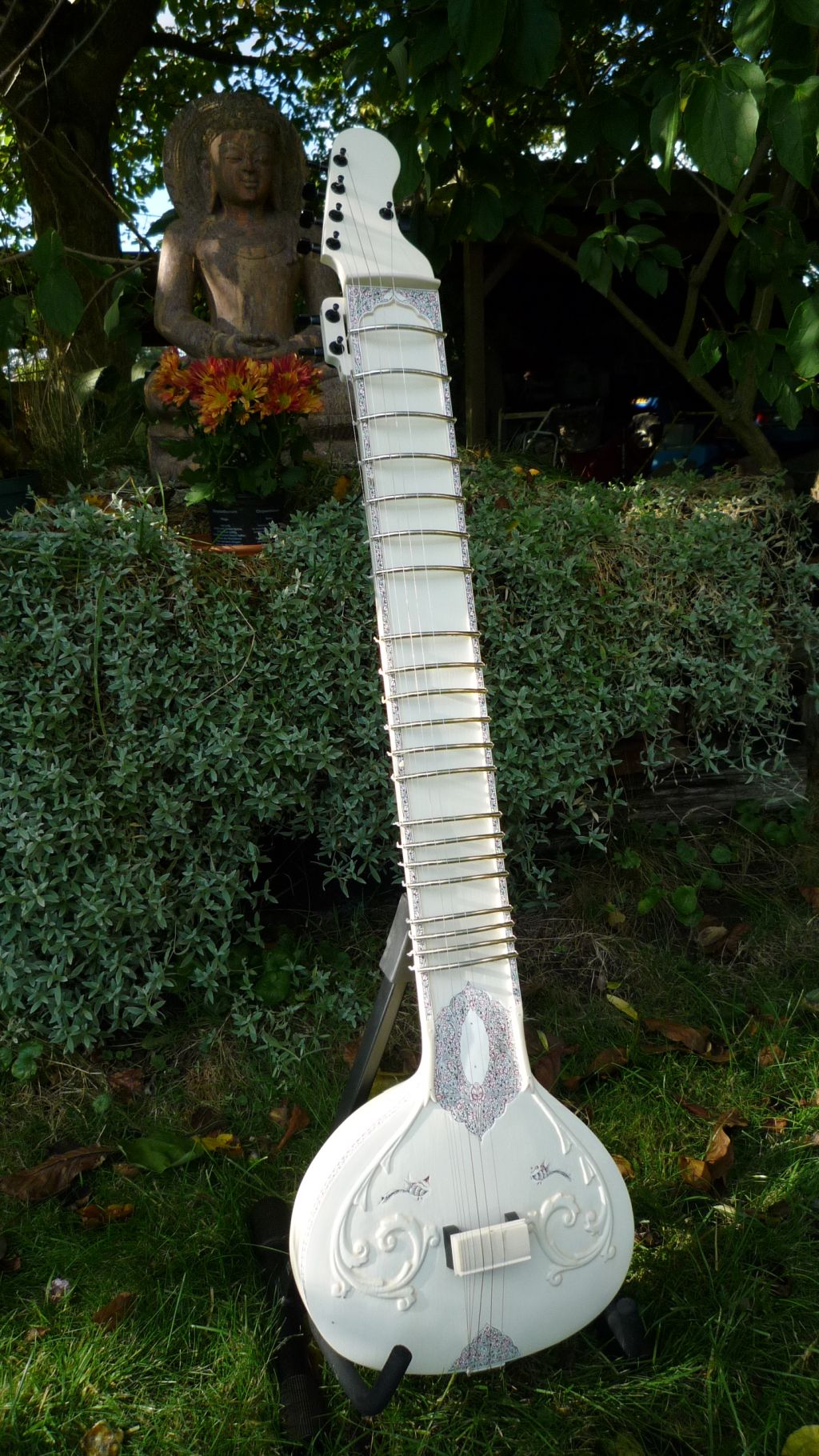
Travel Sitar Mods (3B) … the white & vegan sitar
After finalizing the structural rough woodwork on the travel sitar body (see Part 1 = Travel Sitar Mods (3A)) the final acts are: completing the body finish and preparing and installing the sitar hardware such as godi (jawari), machine heads, strings, pardas and eventually an electro-magnetic pickup. I’ve painted the…

First Karasek sitar
Tony Karasek, an american performing artist and technician with 30 years experience in instrument repairs and maintenance has finally made his first sitar. He writes: “Due to increased market demand, the quality level of Indian instruments currently being produced has suffered significantly. (I made a living for years repairing…
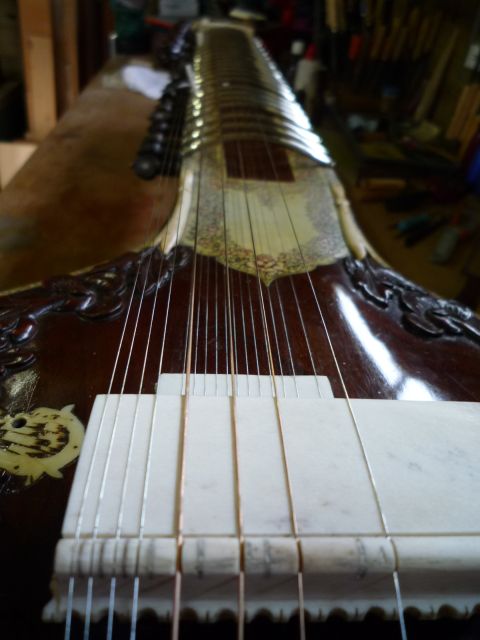
Sitar Mod: adding 4th cikari, the alternative way…
Another young and dedicated Ashok Pathak sishya came to me with this old Hiren Roy sitar. The question came up again: Can you add an extra cikari string to this precious vintage sitar in order to meet the Balaram Pathak Garana style specifications?Since I am not so much in…