An unusual tanpura repair – when an apparent disaster becomes an opportunity for a creative solution.
Accidents happen. Sometimes rather spectacular ones.
Imagine this: after a concert, a tanpura accidentally falls off the stage and crashes onto the floor of the concert hall. With a loud bang, the delicate gourd (tumba) shatters into countless pieces.
Not exactly the ideal moment to start collecting and carefully sorting every single fragment. You pick up whatever you can find, along with the pieces kindly handed to you by helpful members of the audience.
A hopeless case, you might think.
But not necessarily.
More Than 100 Pieces
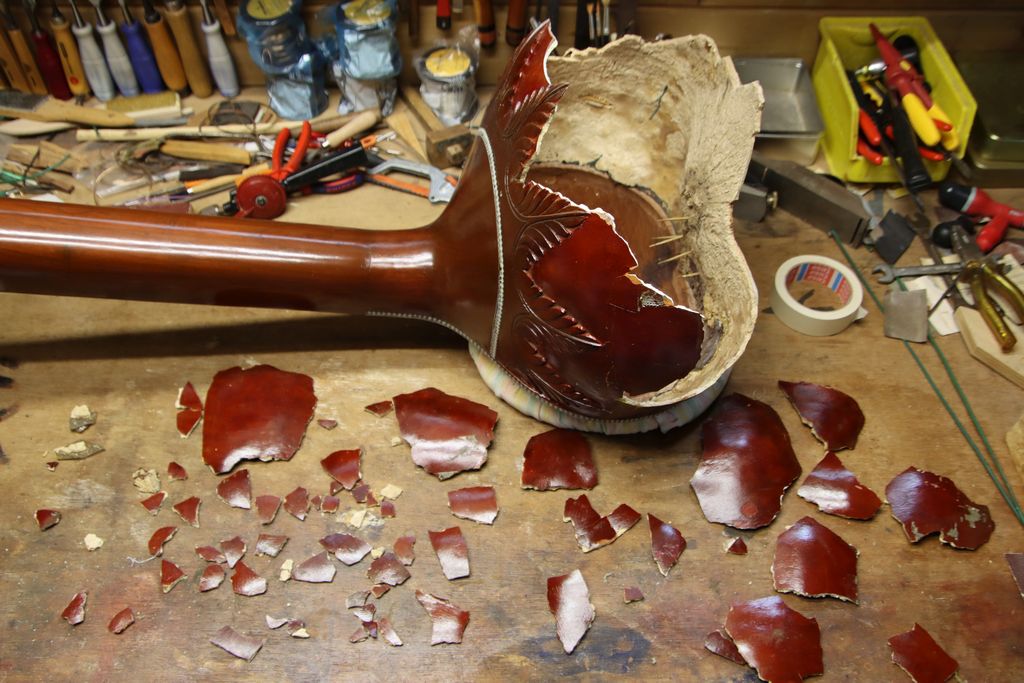
Eventually, this unfortunate tanpura found its way onto my workbench. I must admit, the sight was rather overwhelming. For a brief moment, I almost regretted having accepted the job.
But there was no turning back.
I counted more than 100 fragments, large and small, scattered across my worktable.
And so the puzzle began.
Piece by piece, I tried to reconstruct the original shape of the tumba. Every fragment that found its proper place made it a little easier to identify where the next one belonged. And each successful match brought a small moment of satisfaction. There is something surprisingly rewarding about finding two irregular pieces that fit together perfectly.
Slowly but surely, the shattered gourd began to regain its shape.
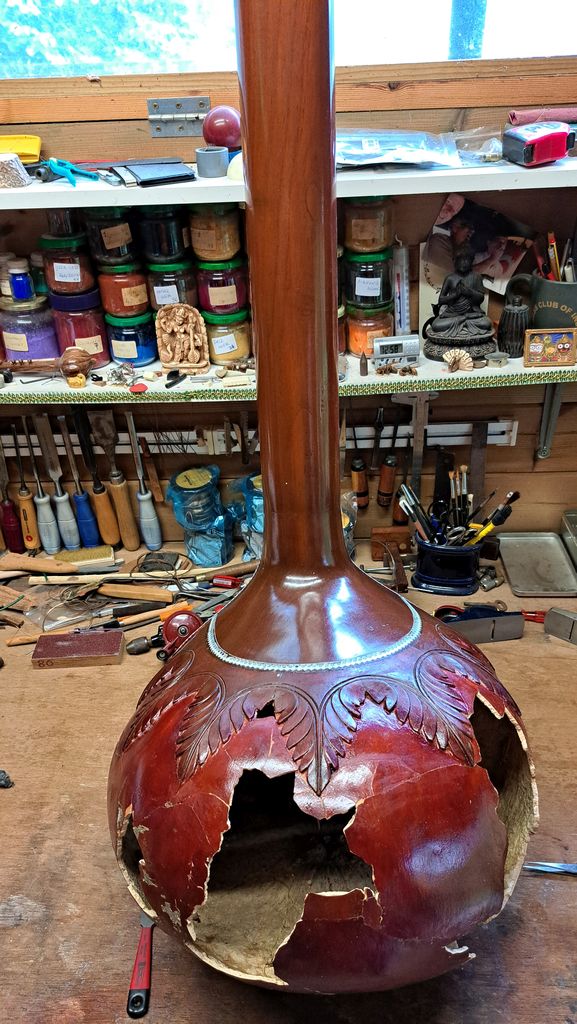
Unfortunately, it also became increasingly clear that some rather large sections were missing.
And that presented a new challenge.
Looking for a Solution
I still have a collection of fragments from old gourds lying around my workshop. Perhaps some of those could be used to fill the gaps? But finding pieces with exactly the right curvature and thickness would be a matter of considerable luck.
Replacing the entire tumba with a new one was hardly a realistic option either.
And although my good friend and fellow instrument maker Kees Verbeek is remarkably skilled at making gourds from papier-mâché, I wasn’t particularly tempted to follow that route myself.
Then another idea occurred to me.
Why not make the tumba smaller?
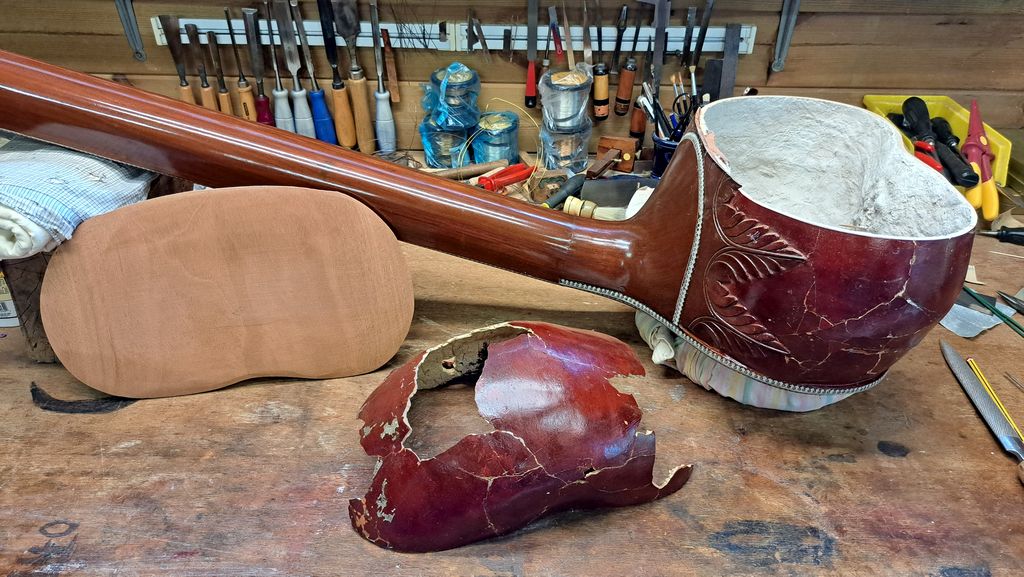
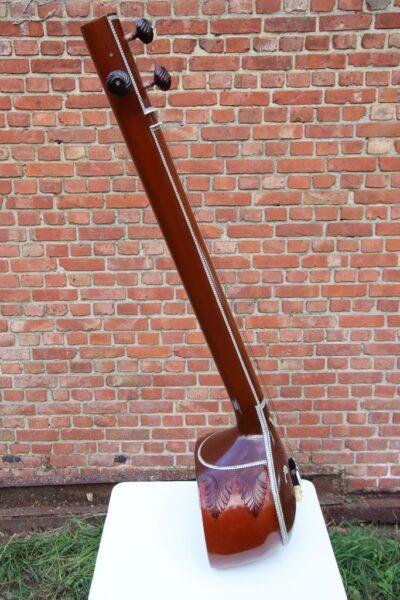
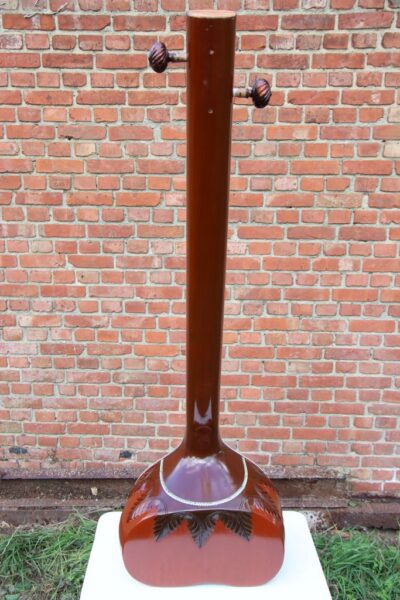
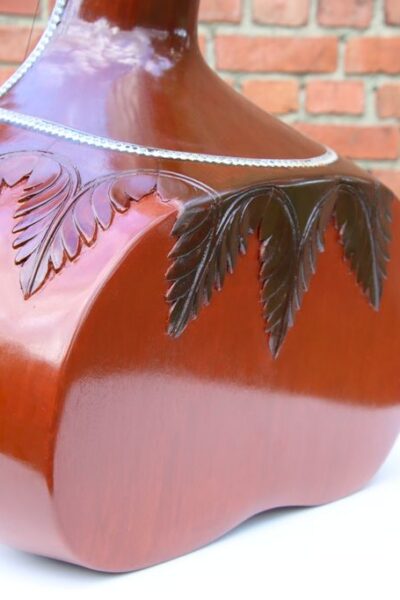
Instead of trying to reconstruct all the missing sections, I could simply cut away the most badly damaged part and replace it with a wooden backplate.
A rather unconventional solution, perhaps, but one that suddenly seemed perfectly feasible.
And that is how the idea of a cutaway tumba tanpura was born.
Giving the Tumba a New Shape
I started with a beautiful piece of mahogany. By carefully joining two matching halves, I created a wooden backplate with a gentle curve.
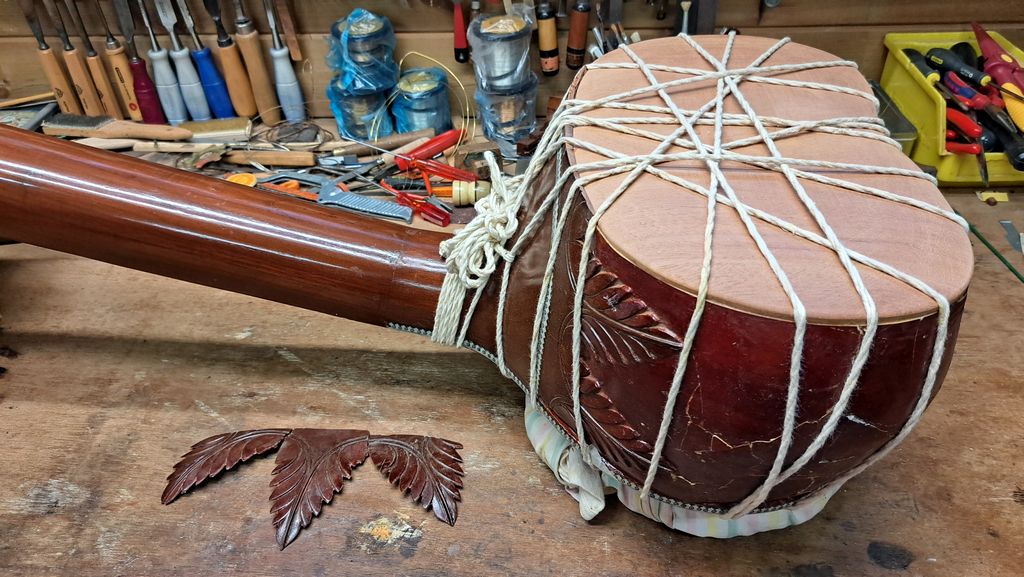
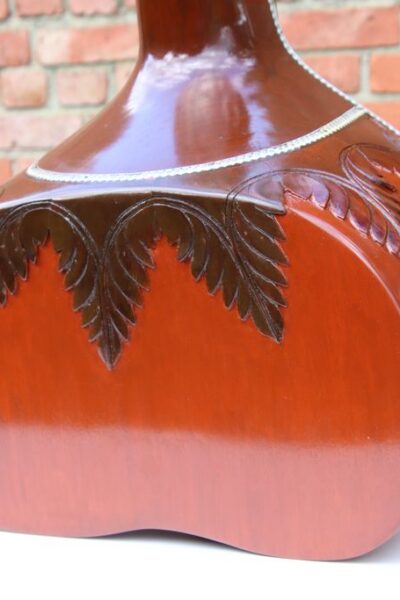
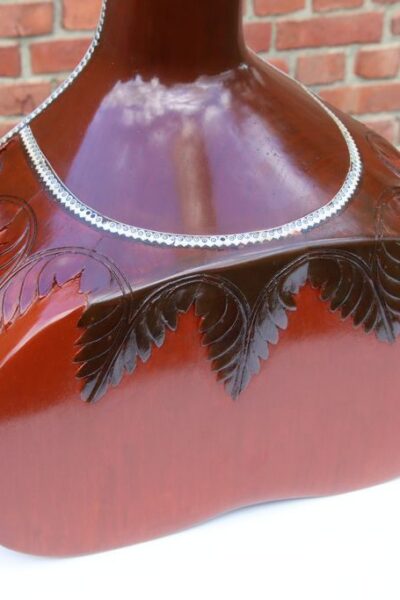
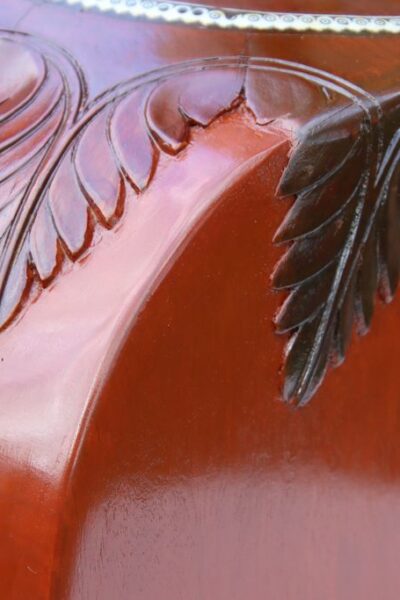
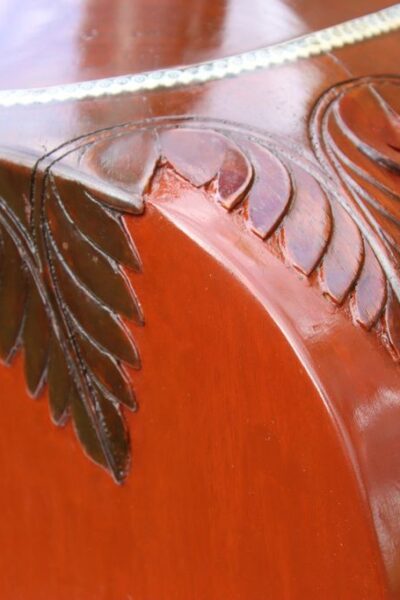
Next came the delicate operation of cutting through the reconstructed gourd. The cut had to be carefully planned, not only to achieve an attractive shape but also to preserve the three original decorative elements.
Fortunately, I managed to recover all three.
After removing the remaining gourd material from their backs, I placed the decorative pieces in my pressure cooker for about an hour. The heat and moisture softened them considerably, making them almost pliable enough to reshape by hand.
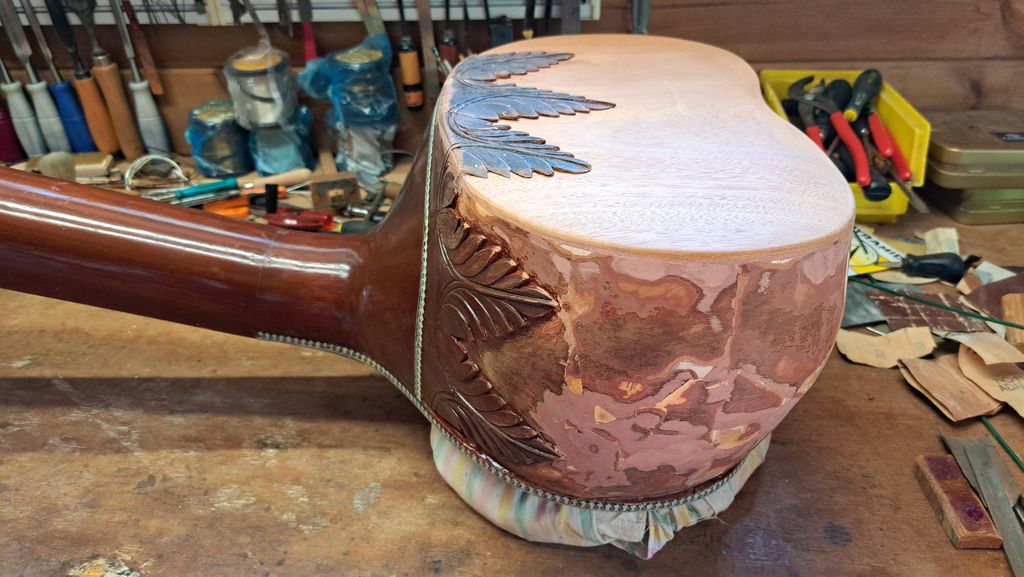
This allowed me to adapt them to the gentle curvature of the new mahogany backplate.
And to my delight, they fitted beautifully.
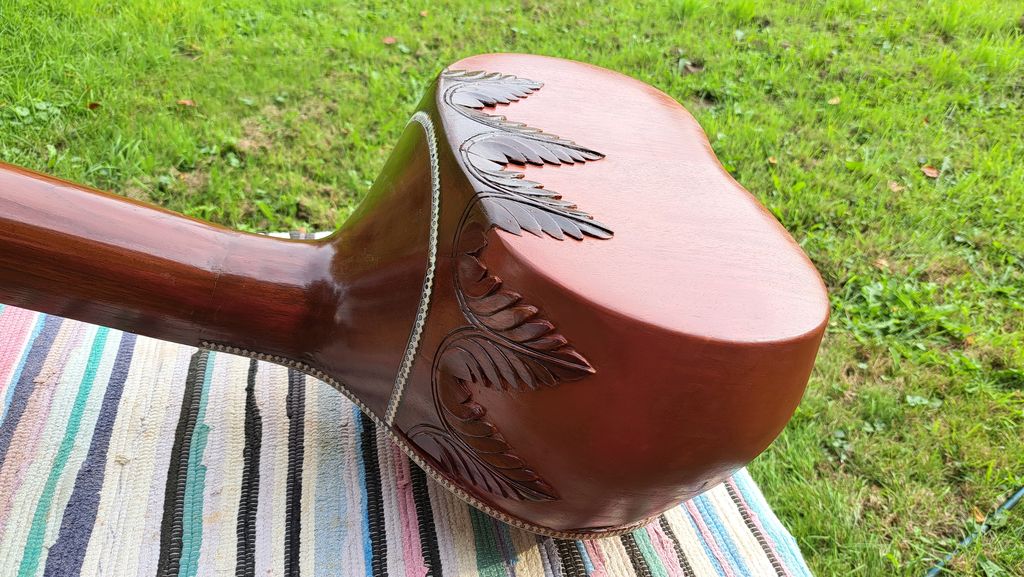
The result looked remarkably natural, almost as though these ornaments had been designed for this particular shape from the very beginning.
Bringing Everything Together
Of course, there was still plenty of work ahead.
Gluing, filing, sanding, adjusting, and more sanding followed. Every transition between the original gourd and the new wooden section had to be carefully shaped into a smooth, flowing surface.
Gradually, the instrument began to look less like a desperate rescue operation and more like a deliberate design.
The new cutaway shape gave the tanpura an unusual but surprisingly elegant appearance.
Once all the structural and surface work was completed, I coloured the restored tumba with iron oxide red and applied the finishing coats of lacquer.
Back to Music
After several days of drying and curing, the instrument was finally ready to receive its strings again.
String Setup and Tuning Specifications
Tanpura tuned to D, scale = 90cm
- Pa – A2 Steel 0,56mm
- Sa – D3 Steel 0,45mm
- Sa – D3 Steel 0,45mm
- Sa – D2 Brass 0,76mm
And then came the moment that matters most: hearing the instrument sing again.
Not quite the same instrument as before, of course. Its shape had changed, and the original gourd had acquired a new wooden back. But it had regained its purpose: to provide the continuous drone that makes a tanpura such an essential companion in Indian classical music.
See and Hear the Result
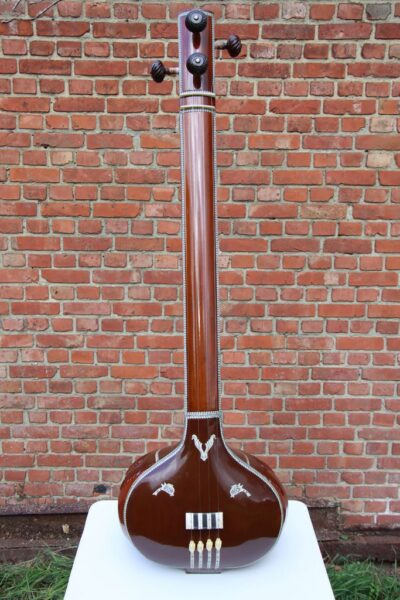
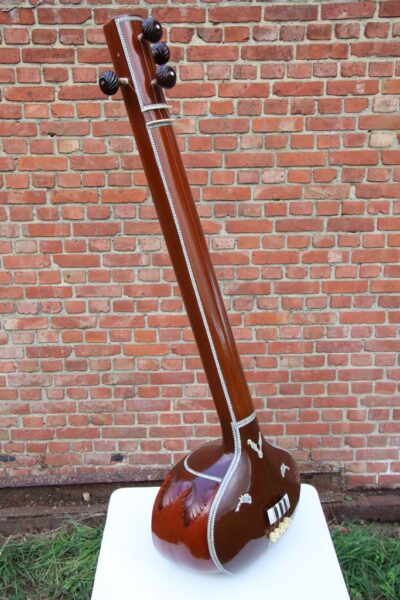
Curious to see what this unusual tanpura looks like, and more importantly, how it sounds?
Sound sample:
Listen to this Cutaway Tanpura in D