
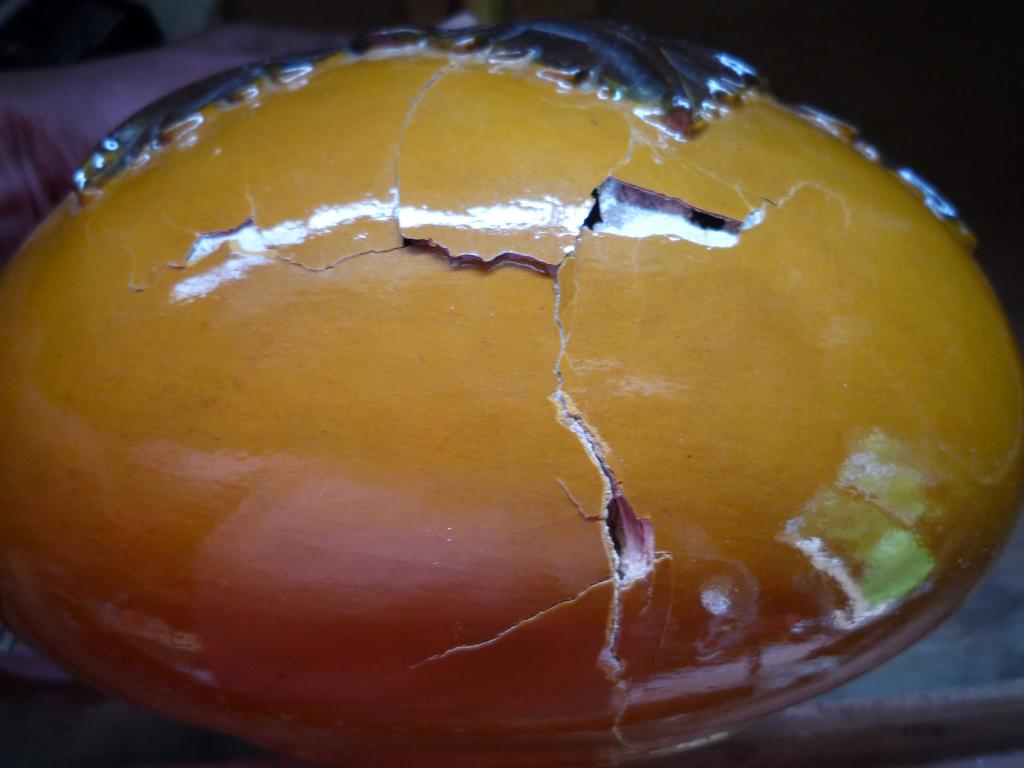
Cavitied G.Rosul gourd
The second tumba of this brandnew beginners G.Rosul sitar has been affected by worms. When the instrument fell down to the ground one day, the gourd got severely broken. Close examination revealed that a big worm has been digging a lot of tunnels through the gourds soft & dry…
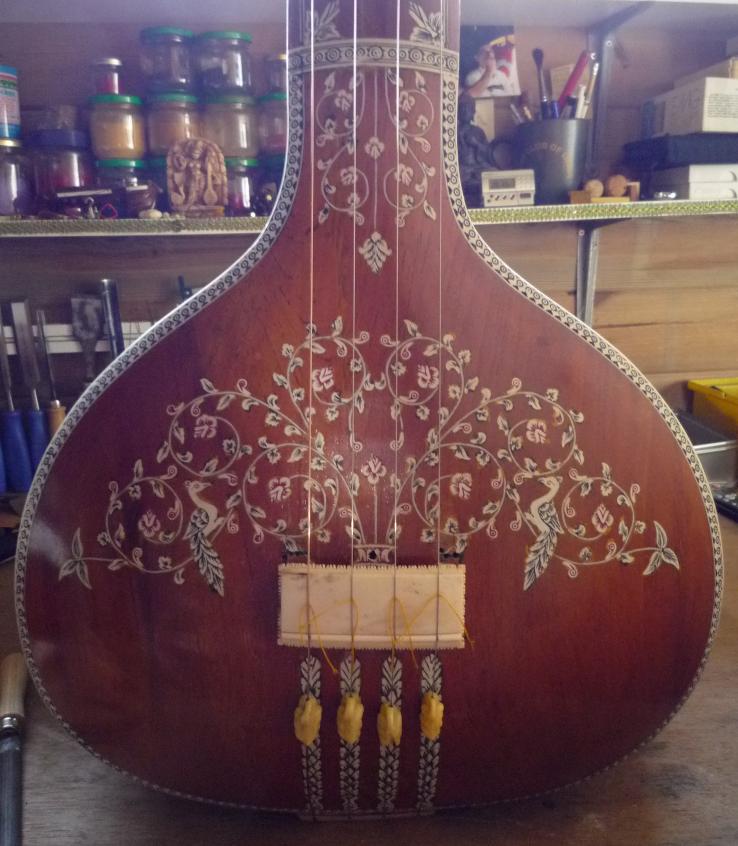
Dagar Tanpura
Ud H. Sayeeduddin Dagar, a great dhrupad singer, cousin uncle from the legendary Dagar brothers, frequently visits Belgium for concerts and teachings. Because travelling with big tanpuras is not easy and not without risk, Dagarji has kept a couple of them here resident for this purpose. Recently, a huge,…
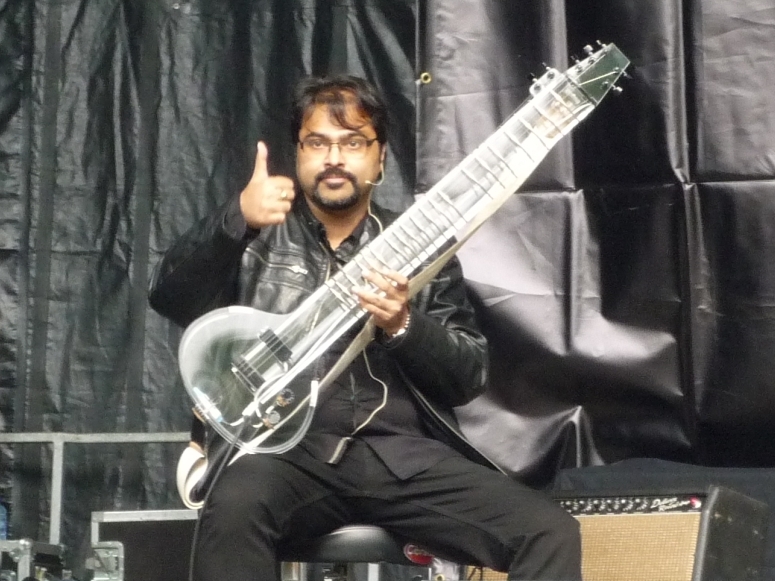
The See-Tar
Last week Friday, 19/06/2015, I’ve delivered this electric plexiglass sitar to Purbayan Chatterjee. One year has passed since he had asked me to build this instrument for him (May 2014). Initially I found it a weird idea and honestly, I didn’t favour the choice of plexiglass because of the…
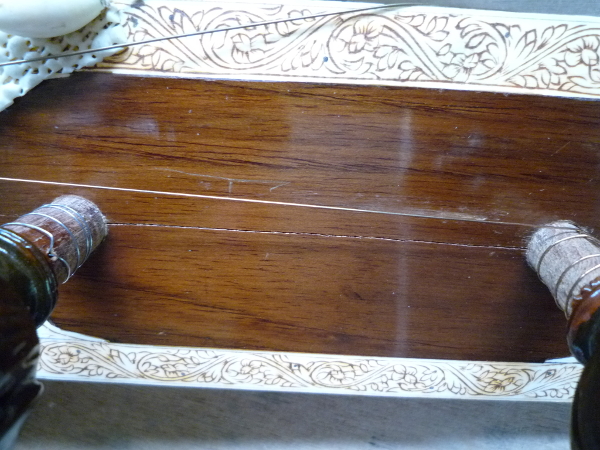
Tuning problem: Cracked wood
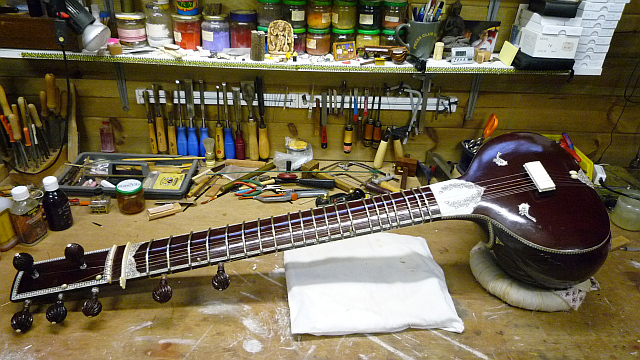
On a traditional sitar, tuning is established by pressing a wooden peg (kunti) into a hole. Unfortunately the wood on this Barun Ray sitar is cleaved. There is a long and deep split line between the baj and jora kunti. Both strings were not keeping tune anymore. The pegs…
Sitar in E
In the musicschool of Breda (NL) De Nieuwe Veste resides a very inspiring, young sitarteacher. In order to motivate new pupils he teaches them first to play rather light classical music and easy popular tunes. Therefore they need their student sitar being tuned in E (instead of C#). Notes…
Tarav Mogara repair page
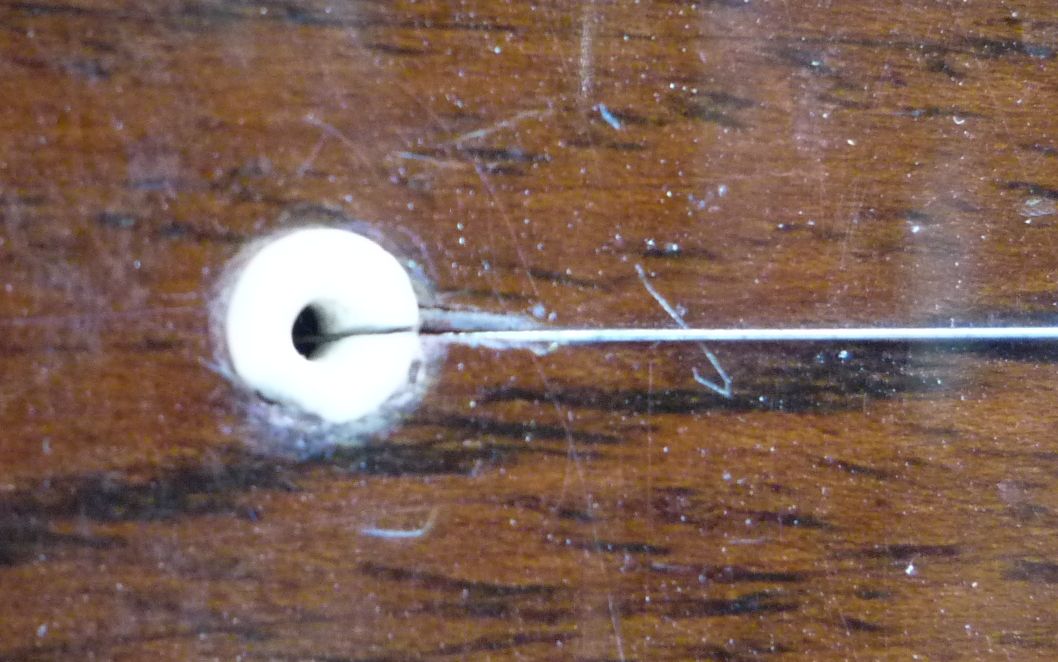
I’ve added an illustrated report about the repair of tarav mogaras. These are small, round ducts which lead the tarav strings through the neck towards the tarav kutis. They are usually made out of bone or horn. Sometimes plastic is used. Due to a very high tension coming from…
White Tanpura
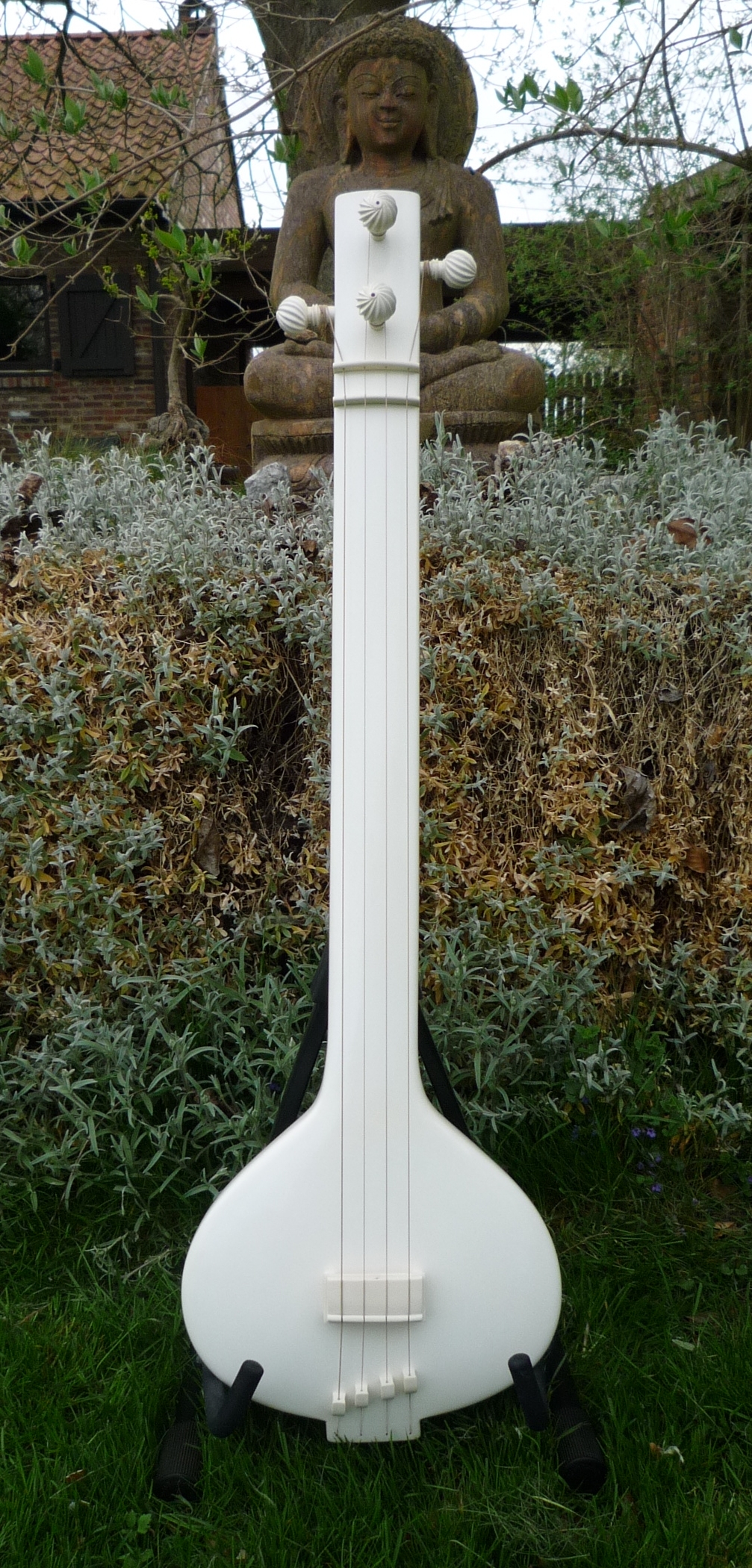
Inspired by the white sitar mod i’ve painted this tanpurabody also in white using Bio Pin™ waterbased organic white paint and Colortone™ high gloss waterbased finish. The patri, jawari and mankas are all made from Elforyn™, a modern synthetic ivory substitute. So also this one became a real “organic…
Surbahar Kunti Repair
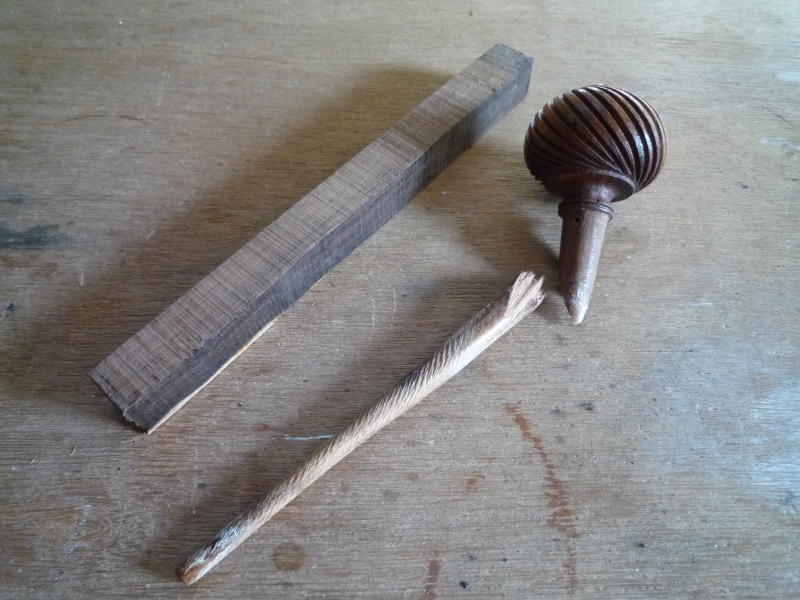
Photo report of a Kanailal & Brother surbahar kunti repair. The main kuntis of this surbahar are very specific. The surface is smooth and only cut with a saw. Original Kanailal replacement kuntis are hard to find. When it is broken, repair is the most obvious solution. In this…

Carbon sitars in production
Harry Shaffer, a creative sitar maker living in Asheville, North Carolina, USA, has been developing an all carbon fiber acoustic sitar over the past couple of years. He began designing plywood guitars as a child and discovered his fascination with the sitar and the music of India in 1993.…
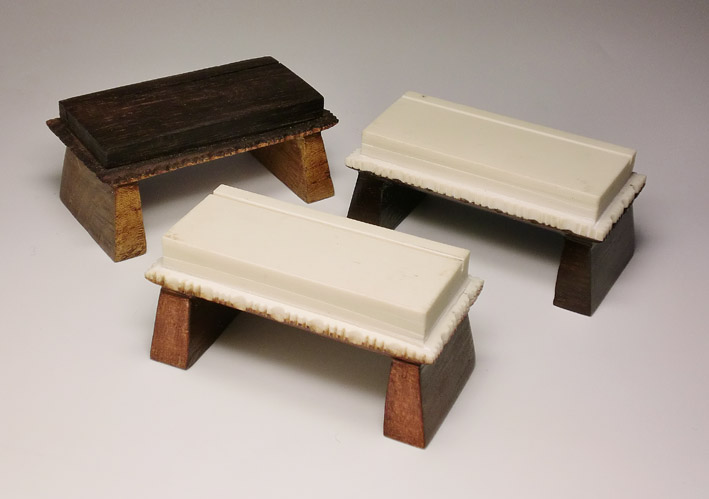
Dieter Zarnitz ghoraj
These ghorajs are made by Dieter Zarnitz. He has copied the Barun Roy and Hari Chand style exactly. The feet are from maple or rosewood, the tops out of snakewood, rosewood or Elforyn™. The setting (“jawari“) can be done at the Sitar Factory (Belgium).
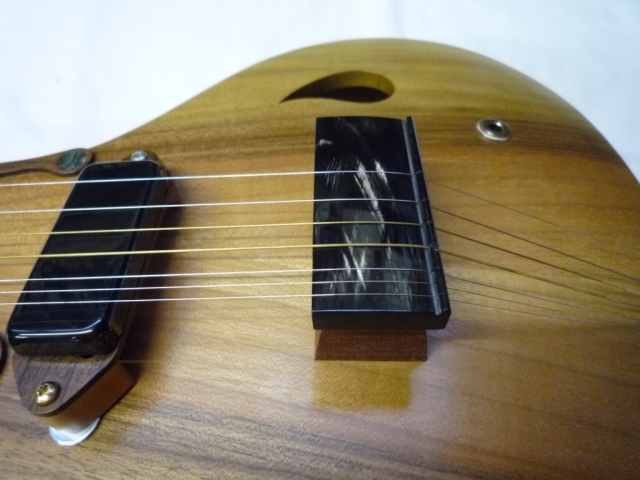
SAS-01 “Black buffalo” edition
Since the good old stagghorn becomes more and more rare, we are in constant seek for a valid alternative. One of the contenders is the black buffalo horn. Buffalo horn plates are used as material for engraving, for pocket knives, tang blades and japanese cooking knives. The plates are…
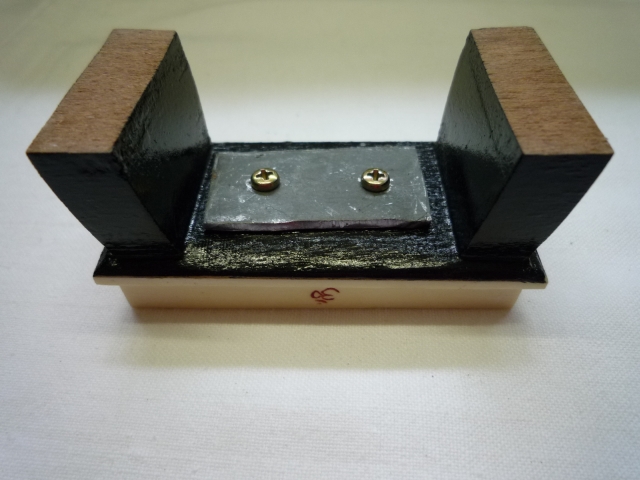
Dead notes
Dead notes on sitar In music, a ghost note, dead note, or false note, is a musical note with a rhythmic value, but no discernible pitch when played. On stringed instruments, this is recognised by the sound of a muted string. Muted to the point where it is more…