

Buddha Systems in Hiren Roy
Engineer and passionate sitar player Ashok Nair has been making excellent pickup systems for sitar and other acoustic musical instruments for several years. They are sold under the name Buddha Systems and are now used by many well-known musicians worldwide. Matyas Wolter is one of them and has been using this transducer for some time. However, Ashok’s pickups are designed to stick to the soundboard of the sitar. A jack plug connection is included and…

Intonation blocks
Intonation on the sitar (& surbahar) is a very complex aspect for players to master due to its unique structure and intricate tuning system. Unlike Western stringed instruments with standardized frets, the sitar’s pardas (frets) are movable, allowing players to adjust the intervals between notes to suit different ragas or tonal structures. This flexibility, while beneficial for musical expression, also creates a challenge in maintaining acceptable intonation. Even slight misplacement of a parda can alter…

Slimbucker on Studiositar
I mounted a Kent Armstrong Slimbucker™ Jazz guitar pickup on a beautiful new Waseem Maner vintage style studiositar. The sitar sounds very natural, with an extra warmth due to enhanced low frequency response typical for this kind of humbucker electro-magnetic pickups. The pickup is tilted to meet the cikaris and adjusted in height between the taravs and playing strings to balance the taravs response. All strings are Pyramid strings, and in particular Jora, Laraj &…
Sitar in E
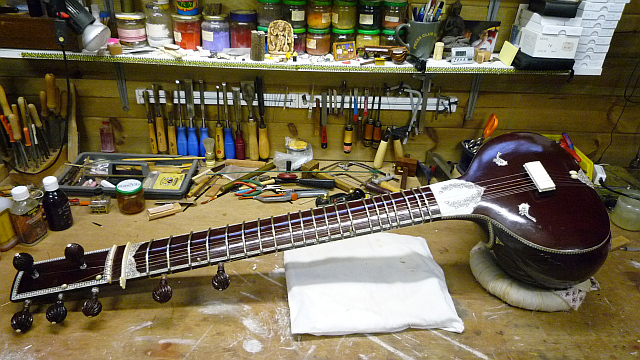
In the musicschool of Breda (NL) De Nieuwe Veste resides a very inspiring, young sitarteacher. In order to motivate new pupils he teaches them first to play rather light classical music and easy popular tunes. Therefore they need their student sitar being tuned in E (instead of C#). Notes have to be shifted from C# to E and because of the rather high shift we have been fitting a very light string set. MA =…
Dead notes
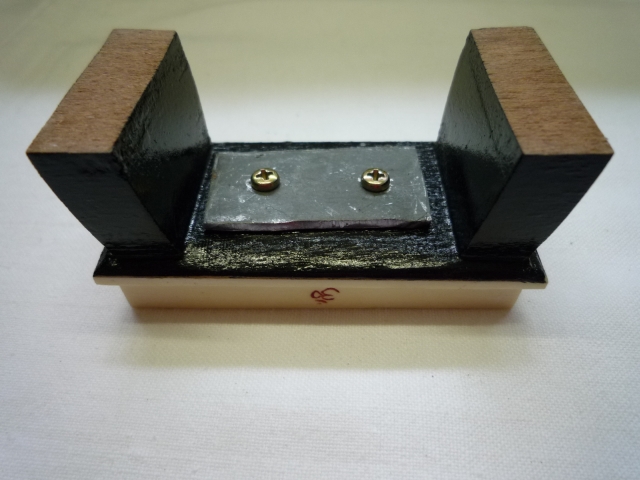
In music, a ghost note, dead note, or false note, is a musical note with a rhythmic value, but no discernible pitch when played. On stringed instruments, this is recognised by the sound of a muted string. Muted to the point where it is more percussive sounding than obvious and clear in pitch. There is a pitch, to be sure, but its musical value is more rhythmic than melodic or harmonic… (source = wikipedia) Until…
Right to left hand modification
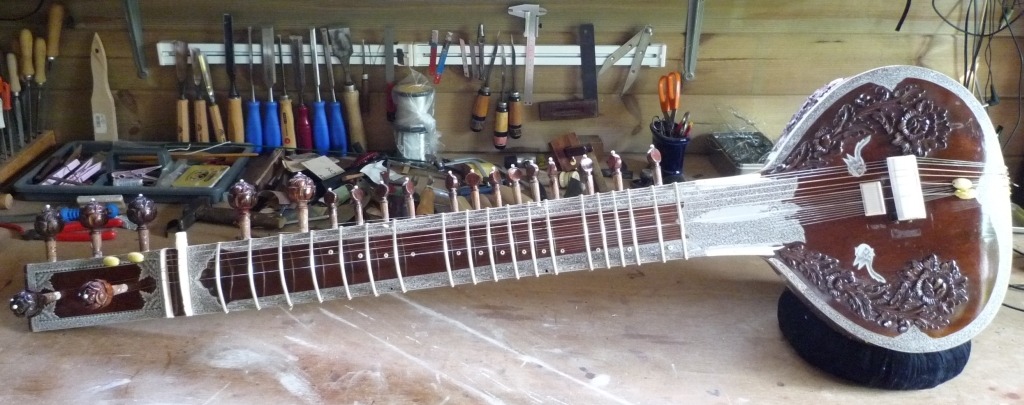
Modifying a sitar from right-hand play to left-hand play… It is not easy to find a suitable sitar if you are left-handed and want to engage yourself into the world of sitar playing. There are good left-hand sitars for sale, but they are very rare and if you find one than there is still the price tag. So, why not modifying a regular sitar from right-hand play to left-hand play ? Is it always possible…
Travel Sitar Mods (3B) … the white sitar
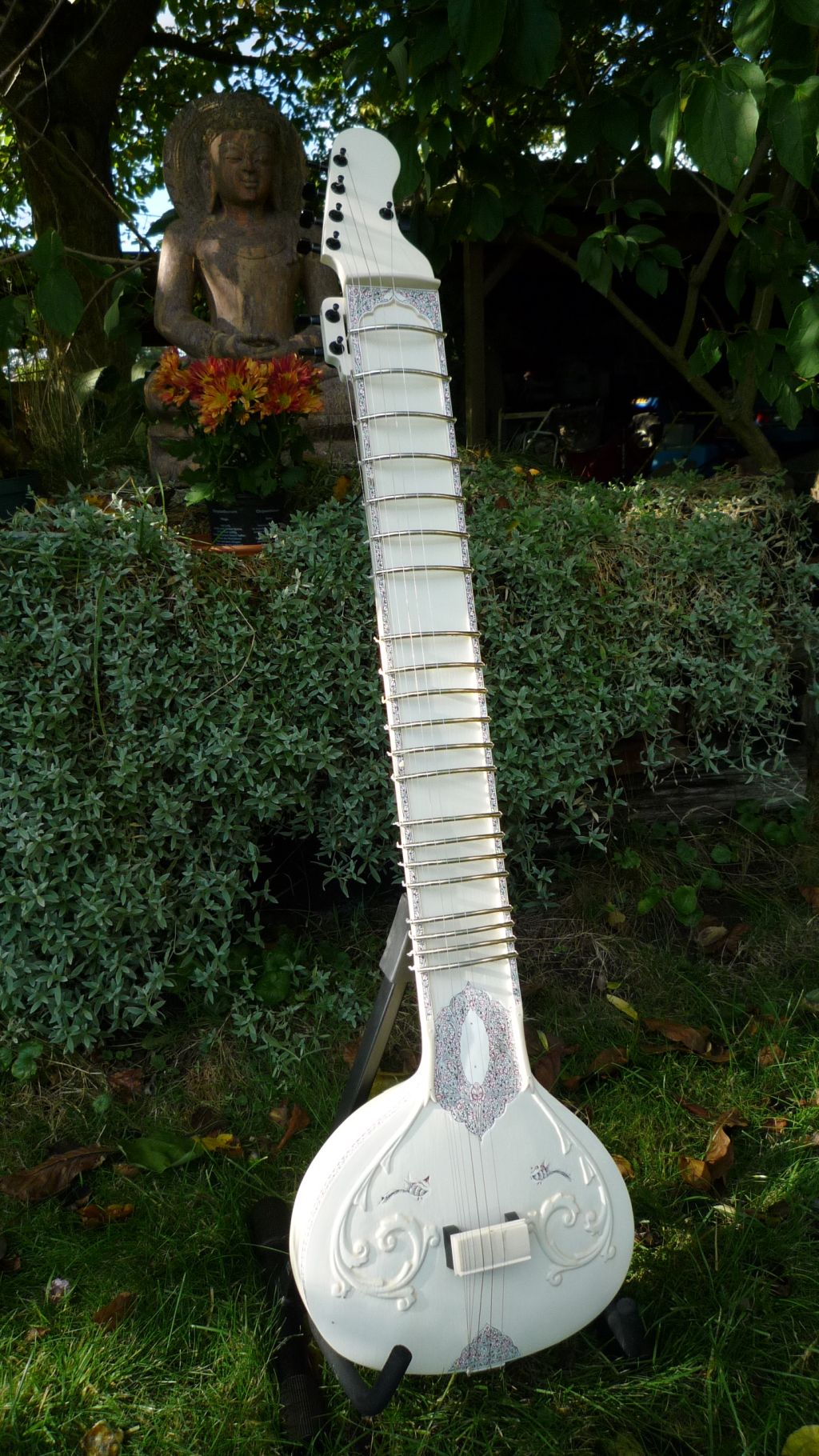
After finalizing the structural rough woodwork on the travel-sitar’s body (see Part 1 = Travel Sitar Mods (3A)) the final acts are: completing the body finish and preparing and installing the sitar’s hardware such as godi (jawari), machine heads, strings, pardas and eventually an electro-magnetic pickup. I’ve painted the body in white using Bio Pin™ waterbased organic white paint and Colortone™ high gloss waterbased finish. The patri, jawari, cikari machine head mount and cikari posts are…
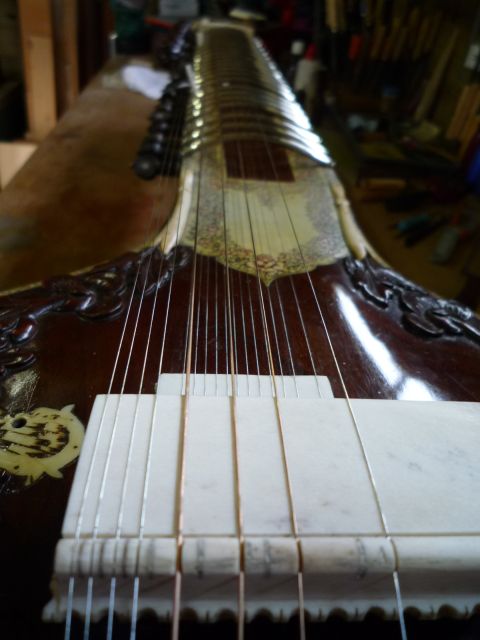
Sitar Mod: adding 4th cikari, the alternative way…
Another young and dedicated Ashok Pathak sishya came to me with this old Hiren Roy sitar. The question came up again: Can you add an extra cikari string to this precious vintage sitar in order to meet the Balaram Pathak Garana style specifications?Since I am not so much in favour of starting to drill holes in old and valuable instruments, I decided to introduce an alternative way. Just as I did before with an old…
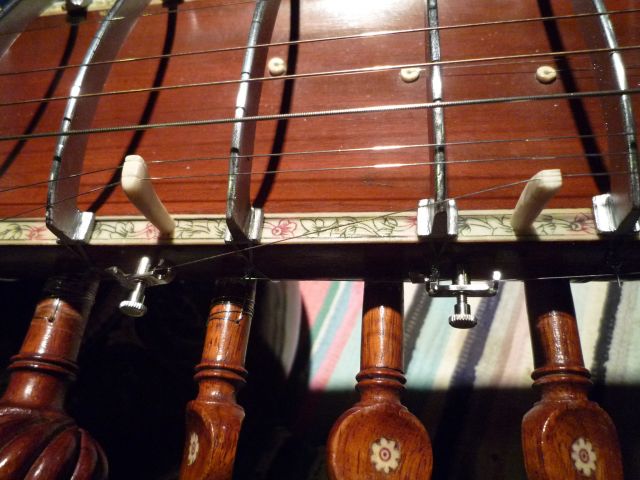
Surbahar Mod: adding 4th cikari
Adding an extra cikari string to this old Kartar Chand surbahar to meet the Balaram Pathak Garana style requirements. No new cikari kuti will be installed because of the surbahar neck construction. The imposant surbahar’s head is jointed to the neck. Therefore it is not obvious to drill an extra hole through this construction. But the solution is very simple: The first tarav kuti becomes the last cikari kuti. Since this kuti can hold every…
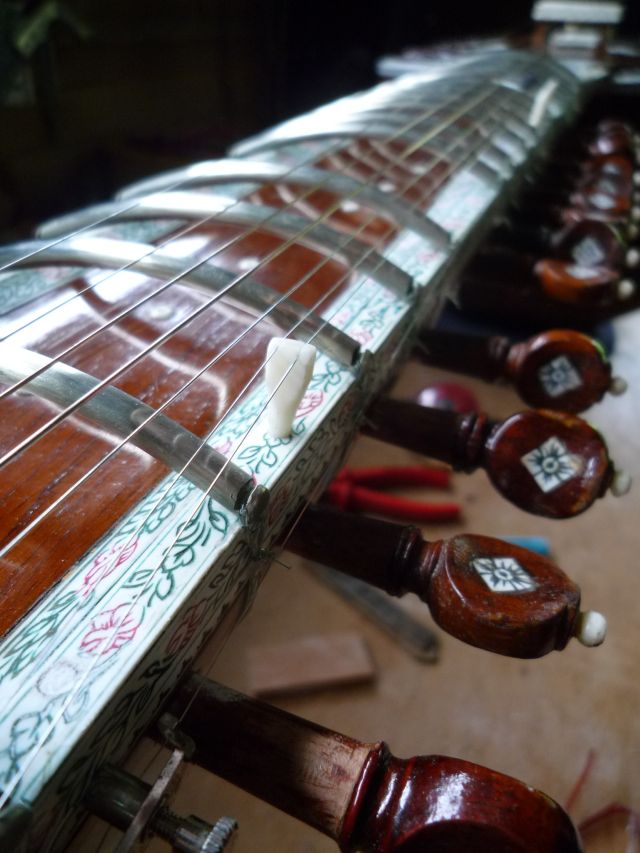
Sitar Mod: adding 4th cikari
On a special demand from a young and dedicated Ashok Pathak sishya I’ve been adding an extra cikari string to his Rikhi Ram sitar in order to meet the Pathak Garana style specifications. Here is the workflow: 1) Selecting and preparing a new kuti. 2) Marking and drilling the holes. 3) Fine tuning and fitting the new kuti. 4) Re-organising the existing cikari string positions and adding an extra cikari string slide on the jiwari.…
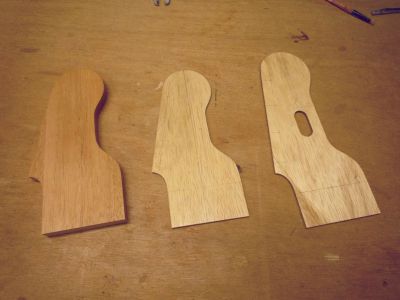
Travel Sitar Mods (3A)
Both Rikhi Ram brothers Ajay & Sanjay, and after them many others, make and sell this handy and compact sitar. Some call it “Ovation” sitar, some call it “Studio” sitar and also “Travel” sitar is commonly used for this successful innovative musical instrument. Commercially it is a succes. No doubt about that. But here is a list of remarks and complaints with which players came to me after they have been buying a new travel…
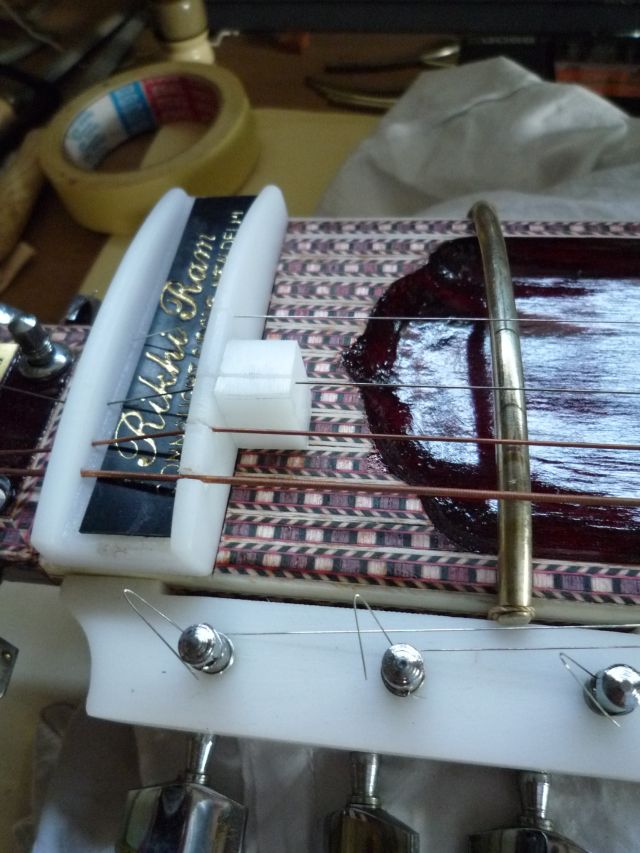
Travel Sitar Mods (2)
This modification I made to Mark B’s Travel sitar because he was unable to play the jora tar comfortably. The steel wire jora tar, although open correctly tuned, sounded too high while playing a note on the pardas. I added a fibre intonation block to the jora tar, just as I did with my own made SAS and SBS sitars. Now he can play the jora tar up to the middle note Sa without any…