
Buying a sitar can be difficult, especially if you are not yet familiar with the instrument. Because sitars are handmade, their quality, playability and sound can vary considerably — even between instruments from the same maker. Here are some Sitar Buying Tips.
Before buying a new or second-hand sitar, it is important to check more than its appearance. Sound, action, fret position, intonation, tuning pegs, neck alignment and structural condition can all make the difference between a good instrument and one that may require extensive adjustment or repair.
Based on more than 30 years of experience as a sitar maker and restorer, I have put together 10 practical checks you can perform before buying a sitar.
1. Listen carefully to the sound
Tune the sitar properly and take your time to listen. Do you like its overall sound? Pay particular attention to the bass strings and to anything that sounds weak, dull or unpleasant.
Keep in mind that the sound of a new sitar can still develop. An instrument needs to be played regularly before it begins to “open up” and its full sound potential is revealed. Nevertheless, if something bothers you about the sound, do not ignore it.
2. Check the fret positions
The frets (pardas) of a sitar are movable. With the instrument properly tuned, play the notes on each fret one by one and check their pitch.
If a note is not correct, adjust the position of the fret. At the same time, look at the side of the neck and make sure that the fret’s binding wire does not come too close to a tuning peg. On a well-made sitar, the fret bindings should generally be positioned between two tuning pegs rather than interfering with them.
Also check whether any of the fret bindings are loose.
3. Measure the action
With the sitar in tune, measure the distance between the main playing string and the fret closest to the bridge. This should be approximately 8–11 mm.
If the action is considerably higher, be cautious. There may be a problem with the neck or with the neck joint.
4. Test the meend
Once the sitar is properly tuned — and only if the action checked in point 3 is acceptable — play a full meend (string pull) on all the frets.
Listen carefully and make sure that the playing string does not touch the fret next to the one on which you are pulling the meend. The string should have enough clearance to allow a full, clean pull.
5. Check the intonation
With the instrument properly tuned, check the intonation of the other main strings.
Pay particular attention to the second (jora) string. When you play a note directly on a fret, without meend, it may sometimes sound slightly too low. A slightly low note can often be corrected while playing by applying a little meend.
If the note is already too high, however, you cannot correct it in this way. This may indicate an intonation problem that needs attention.
6. Test all the tuning pegs
Try every tuning peg (kunti). Each peg should turn smoothly and should not suddenly become stuck after a short turn.
If you have doubts about a peg, remove it and check whether it is reasonably round and straight. Poorly fitting or distorted tuning pegs can make accurate tuning unnecessarily difficult.
7. Check the body and tabli for loose parts
Gently tap the tabli (soundboard) with the back of your finger and listen to the response. A solid, well-glued structure should give a clear response. A dull, rattling or buzzing sound may indicate that something is loose.
Try to locate where the sound comes from and discuss it with the seller.
Also gently tap around the tumba (gourd) to check for loose areas, cracks or unusually thin spots. The response should be reasonably consistent over the surface of the tumba.
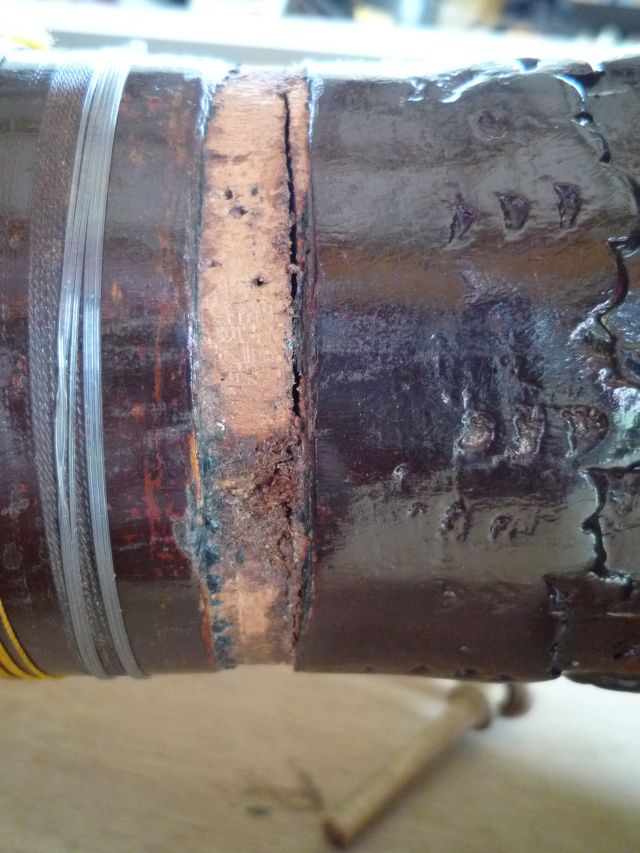
8. Inspect the neck joint
Carefully inspect the joint at the back of the sitar where the neck meets the wooden section connected to the tumba.
There should be no visible gap or crack in this area. The neck joint is a structural weak point on many sitars, so any sign of movement or separation deserves serious attention.
9. Check the overall weight
Lift the instrument and consider its overall weight. A sitar should not feel excessively heavy, but an unusually light instrument can also raise questions about its construction.
This can be difficult to judge if you have little experience, so if possible compare several sitars in the same shop.
10. Check the neck for bending
With the sitar tuned, look carefully along the length of the neck and check whether it appears excessively bent.
A small amount of bending under string tension is normal, but the neck should appear reasonably straight to the eye. If you can clearly see a pronounced bend, be cautious: correcting a badly bent neck can require substantial repair work.
Take your time before buying
Most importantly, do not rush your decision. Take enough time to check all ten points and ask questions about anything you are unsure of. A knowledgeable and trustworthy seller should be willing to discuss the instrument, explain any issues and give you enough time to evaluate it properly.
Judging a sitar is not always easy, especially for a first-time buyer. If you have doubts about the quality or condition of an instrument, take those doubts seriously and, if possible, ask an experienced player or sitar maker for advice before buying.
Buying a sitar online
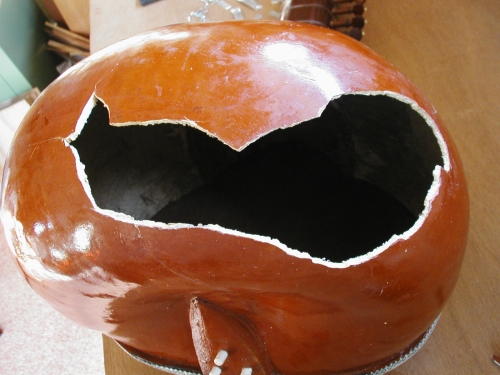
Buying a sitar online carries additional risks. A beautiful photograph and an attractive description cannot tell you everything about the sound, playability, intonation or structural condition of an instrument. Because sitars are handmade, quality can vary considerably.
Shipping is another important consideration. Sitars are fragile instruments, and the tumba and tuning pegs are particularly vulnerable to damage. If an instrument has to be shipped, make sure it is properly protected — preferably in a strong case — and discuss packing, transport and insurance with the seller beforehand.
Read here Practical Tips to Prevent Damage in Transit: How to Ship a Sitar Safely
View sitars at SiTAR FAcToRY
You are always welcome to visit SiTAR FAcToRY to try an instrument before buying it. All second-hand and restored instruments offered through the SiTAR FAcToRY Shop are carefully inspected and checked according to the points described above.
Thanks
This was posted a long time ago, but since it may help someone else i’ll leave a reply. If your sitar is from a reputable maker then you are guaranteed some level of quality (more expensive doesn’t always equal better, and even well known makers don’t get it right 100% of the time!). If you’re unsure of the maker or if it’s just an inexpensive one of unknown origin, then the chances of you getting an instrument that sounds awful or is worse completely unplayable, goes up exponentially. I made the mistake of buying an instrument from a very well known maker in delhi, only to find out when i got home that it had been damaged and repaired…and it sounded crappy and un-inspiring. i have to have an instrument that sounds exceptional, a pretty sitar (heavily decorated) doesn’t always mean it’s good either. of course if you can find a sitar that’s beautiful and has great sound then you’ve totally scored! Vilayat Khan sitars, which i personally prefer, aren’t usually very ornately decorated. i like this though, they can be beautiful in their simplicity. however, the VK style only has 6 strings, so the top peg is really there to provide aesthetic rather than functional symmetry. the ravi shankar style, however has 7 strings. they do sound different from one another. a vilayat khan sounds less buzzy and more “crisp?” if that makes any sense. listen to ustad vilayat khan play a raga and compare that to the sound of ravi shankar’s sitar. that’ll give you an idea of the sound difference. some people say they can’t hear much of a difference but i can. so when it comes down to it if an instrument sounds horrible, then it may be unsalvageable. if it wasn’t too expensive then it’s not too much of a loss…but completely frustrating all the same. if you decide to purchase a sitar in the future, then buy from someone in the us or europe (i recommend rain city sitars in the us). i’ll use rain city as an example…let the owner know what you want, sound wise VK or RV? and let them know how much money you want to spend, and what level of playing you want to achieve. if you play only occasionally then there’s no need to buy the most expensive sitar out there. but do realize a quality instrument from a known maker is going to cost a bit more, however you have an instrument that’ll last you a lifetime. the owner at rain city will even play the sitar for you! so you know what you’re getting beforehand. this is the sign of someone who isn’t trying to cheat you, Lars at rain city makes sure you don’t get a lemon. his website also has great information on sitars (how to tell a well made sitar from a not so good one). so there it is. hope this helps someone. there’s a million sitars out there and i had to learn the hard way a couple of times. so definitely do some shopping around, and if the seller is really good they should have no problem playing a potential instrument for you. namaste and good luck!
HI, my question is that my sitar a V.Kahn sitar looks ok , feels ok but the sound is not ok. I bought it second hand and it really doesnt sound well, more like a guitar sound, there is no resonation, would it help to put on new strings and could I add a 7 th main string to have more resonation when playing , what seize of strings must this be, do i tune it in C sharp ? Could I use R.Shankar strings as well on my sitar ?