
How to Ship a Sitar Safely – Practical Tips to Prevent Damage in Transit
Shipping a sitar is not quite the same as sending an ordinary parcel. If you want to know how to ship a sitar safely, good preparation and careful packing are essential. A sitar is large, fragile and awkwardly shaped, with several parts that can easily be damaged if the instrument receives a shock during transport.
Over the years I have received and shipped many sitars, and unfortunately I have also seen what can go wrong along the way. A broken tumba, damage around the tabli, a cracked neck or damaged tuning pegs can turn a seemingly straightforward shipment into an unpleasant experience.
Fortunately, a few simple precautions can greatly reduce the risks. Here are some practical tips for packing and shipping a sitar as safely as possible.
1. Prepare the sitar before packing
Before putting the sitar into its case, release most of the tension from the strings. There is no need to remove all the strings, but the instrument should not travel under full string tension.
I also recommend removing the bridge. Wrap it separately and securely, and place it inside the case where it cannot move around.
Another vulnerable area is the top of the neck, particularly the pegs of the first two main strings, baj and jora. These protruding pegs can easily be damaged if the case receives a strong impact.
Remove these two pegs, wrap them individually and store them safely inside the case.
2. Use a good fibreglass case
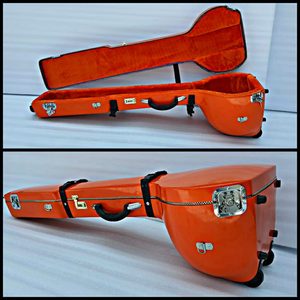
For shipping, I strongly recommend a solid fibreglass sitar case rather than a soft bag or lightweight case.
The case should fit the instrument properly and prevent it from moving around inside. Pay particular attention to the tumba, neck and pegbox. Use soft padding where necessary, but avoid packing material that puts pressure on fragile parts of the instrument.
Remember that even a good case does not make a sitar indestructible. Parcels may be stacked, dropped or handled roughly during transport.
3. Take photographs before shipping
This is one of the most important steps, especially if you purchase additional transport insurance.
Many shipping companies offer insurance against loss or transport damage. However, if the instrument arrives damaged, you may have to prove that the damage occurred during transport and was not already present beforehand.
Before packing the sitar, take a clear series of photographs showing the condition of the complete instrument.
Pay particular attention to vulnerable areas:
- the tabli and the area around its edges;
- the tumba, which can crack or break after an impact;
- the neck;
- the pegbox and the area around the main tuning pegs;
- any other delicate or protruding parts.
Take close-ups as well as photographs of the complete instrument. The idea is simple: if something is damaged on arrival, you should be able to show clearly what its condition was before shipment.
4. Photograph the case as well
Once the sitar is packed securely, take photographs of the case before adding the final outer protection.
Make sure the photographs clearly show that the case itself is in good condition, without cracks, dents or other existing damage.
This can be extremely useful if you later have to make a claim with the carrier or insurance company. Photographs taken before, during and after packing create a simple visual record of the complete packing process.
5. Protect the outside of the case
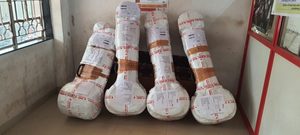
Even a strong fibreglass case benefits from an additional protective layer.
The case can be wrapped in suitable protective packaging such as bubble wrap, foam or another shock-absorbing material, followed by a strong outer wrapping. The purpose is not only to protect the sitar but also to prevent scratches and direct impacts to the case itself.
Make sure everything is firmly secured. Loose wrapping can tear or become caught in conveyor systems during transport.
6. Keep the handle accessible
This is a small detail, but an important one: keep the handle of the case free and usable.
When wrapping the case, do not completely cover the handle with layers of packaging material.
If the people handling the shipment can easily pick up the case by its proper handle, they are more likely to carry it correctly. If there is no accessible handle, the case may be grabbed by the neck, dragged, dropped or handled in other less desirable ways.
Make it easy for the carrier to handle your sitar carefully.
7. Make it clear that the contents are fragile
Once the case is completely packed, add clearly visible FRAGILE labels or stickers indicating that the parcel contains a musical instrument.
Of course, a fragile sticker is no guarantee that a parcel will always be handled gently. Nevertheless, it makes sense to clearly indicate that the contents require special care.
If appropriate, you can also indicate which side should remain upwards.
8. Protect the shipping label against water
Finally, attach the shipping label with the destination and transport information.
Do not assume that the package will remain dry throughout its journey. It may be exposed to rain while loading or unloading, or to moisture during transport.
Make sure the shipping label is waterproof or place it underneath a transparent plastic cover. Addresses, barcodes and tracking information must remain perfectly readable even if the package gets wet.
For extra security, I also recommend placing a second copy of the recipient’s and sender’s contact details inside the case. If the external label is damaged or lost, there is still a way to identify the shipment.
9. What to do if the sitar arrives damaged
If the sitar arrives damaged, do not throw away the packaging.
Before removing or discarding anything, take plenty of photographs. Start with the package exactly as it arrived. Photograph any dents, tears, punctures, crushed areas or other visible signs of rough handling.
Then document the unpacking process and take clear photographs of:
- the outer packaging;
- the shipping labels and transport documents attached to it;
- the case and any damage to it;
- the protective material inside;
- the sitar as you first find it;
- close-ups of every damaged part of the instrument.
Keep all packaging materials and all shipping documents and labels. Do not remove or discard the labels attached to the wrapping or case, as they may contain tracking numbers, routing information and other details that can be important when making a claim.
If possible, also avoid repairing the damage immediately. First contact the carrier or insurance company and follow their claim procedure. They may ask for additional photographs, documentation or even an inspection of the instrument and packaging.
This is also why taking photographs before shipping is so important. Together, the before-and-after photographs can provide clear evidence that the instrument was undamaged when it was packed and that the damage occurred during transport.
A little preparation can prevent a lot of trouble
There is no way to make shipping a sitar completely risk-free. It remains a large and delicate musical instrument, and once it leaves your hands you have little control over how it will be treated.
But you can considerably reduce the risk.
Release the string tension, remove and protect vulnerable parts, use a strong case, pack it carefully and document everything with photographs. Keep the handle accessible, protect the shipping label and make sure the carrier knows that the parcel contains a fragile musical instrument.
And if something does go wrong, document everything before you start cleaning up or repairing the instrument. Good photographs, the original packaging and the shipping documents can make all the difference when filing a damage claim.
Perhaps the most important lesson from years of shipping and repairing instruments is this: prepare the package as if you already know it is going to receive a few knocks along the way.
If it arrives without them, all the better.