
Meet the Maker – Scott Hackleman: Sitar making in USA
Intro
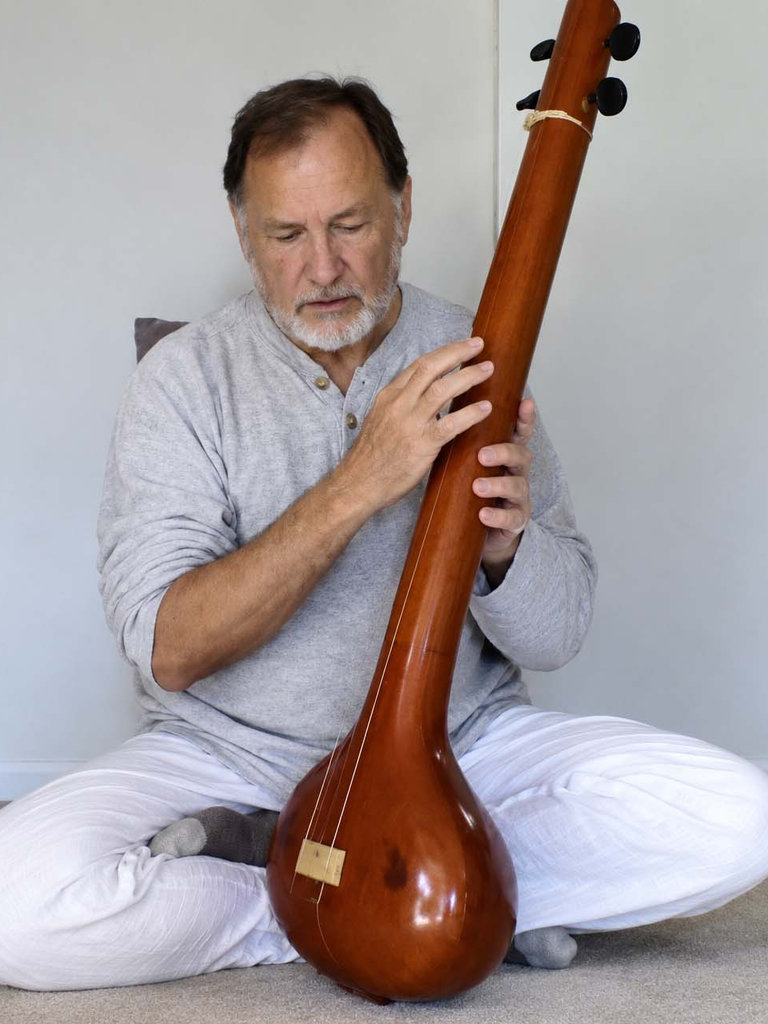
In the Meet the Maker series, I talk to sitar makers from all over the world. People who bring instruments to life with their hands, their ears and their hearts. Meet Scott Hackleman.
An instrument maker, restorer and sitar player, his relationship with Indian musical instruments reaches back more than half a century. His path is an unusual one: from woodworking and Western classical music to sitar lessons, from watching the legendary Nodhu Mulik at work to an apprenticeship with Kartar Chand Sharma in Delhi. It is a story that brings together music, craftsmanship and a lifelong search for something that goes beyond the instrument itself.
Perhaps Scott expresses this best in his own words:
The majority of my clients are not, strictly speaking, “musicians”. They are aspirants of higher states of consciousness who utilize music to do so. Most of the Tamburas I have built have been for people who use them for internal development rather than external virtuosity. This is not to denigrate the many serious musicians that I service with repairs and especially jawari work…These musicians thirst to get the most from their sitars or veenas and deserve an instrument equal to their skill and sensitivity. It is a great honor to provide them with that.
At the same time, his work is deeply practical: careful construction, good materials, sensitive jawari, attention to acoustics and an understanding that tradition and innovation need to remain in balance.
Meet Scott Hackleman.
Profile
- Name: Scott Hackleman
- Location: Point Roberts, Washington, USA
- Active since: 1973
- Speciality: Repair or construction of Tanpura, Sitar, Surbahar, Veena & Building bespoke musical instruments such as experimental or microtonal instruments.
- Website / socials: www.hacklemanshop.com
Interview
How did you start making sitars?
I learned woodworking and studied Western classical music from an early age which got me involved in building and repairing clavichords and harpsichords.
I started learning sitar in Houston Texas in 1968 resulting from my study of yoga and meditation (not pop music!) and in 1973 began private lessons with Amiya Dasgupta in Los Angeles.
Amiya, in addition to being a senior disciple of Ravi Shankar, was an old friend of Nodhu Mulik (the maker of Ravi Shankar’s sitar). Nodhu traveled everywhere with Ravi-ji in those days, looking after his sitar and playing tambura.
Whenever Nodhu came to Los Angeles, he would stay at Amiya’s apartment and take-on the many repairs and jawari work when the word went out he was in town.
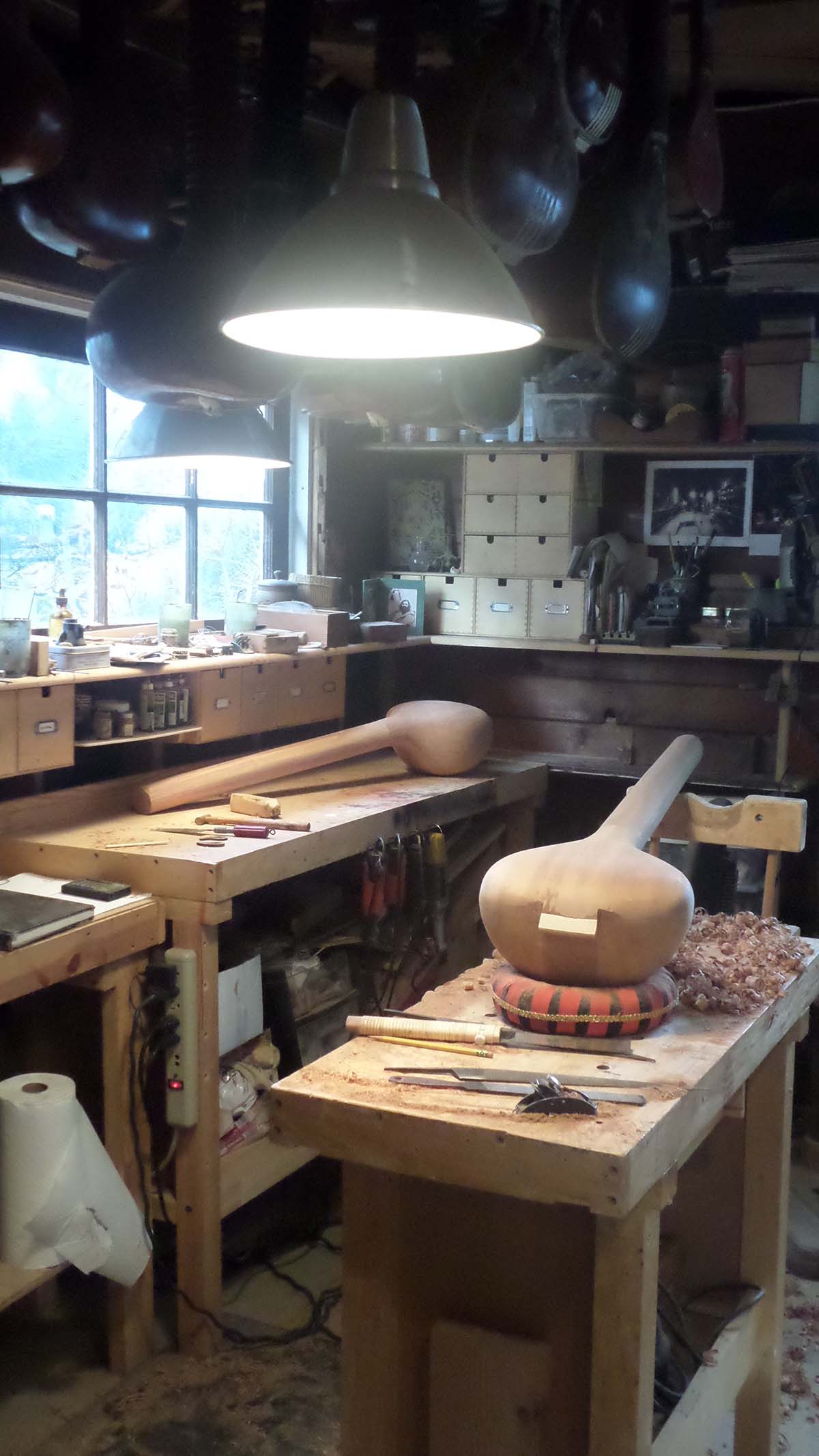
I asked Amiya if I could watch Nodhu work. Nodhu initially refused but Amiya, knowing of my passion for building instruments eventually got Nodhu to agree.
This led to a close relationship with Nodhu over the years which inspired me to go much deeper into how the sitar is made & maintained.
I received a BFA in ICM/sitar from California Institute of the Arts (CalArts) in 1985 and found that, more than performing, my real passion was to learn jawari and the traditions of how these instruments were made.
Ravi Shankar sponsored me in a grant from the American Institute of Indian Studies in 1986 to apprentice with a master instrument maker in India. For the year of 1987 I studied with Kartar Chand Sharma in his shop in Pahar Ganj. I helped build a sitar as part of that apprenticeship, but have not built a sitar in my shop in America yet.
What does your environment mean to your work?
I foster in the environment of my shop a sense of magic. Conjuring is going on there. For that kind of creativity a tranquil surrounding is of great importance. But what is being created is not something static, but rather musical instruments, so for that kind of creativity a cultural influence is important.
Point Roberts is perfect for this. It is an “exclave” and as such is a rural community which provides a tranquil setting where time almost stands still, yet is within a short distance to downtown Vancouver British Columbia, Canada thus being adjacent to a thriving musical culture.
What, in your opinion, makes a good sitar?
Careful, conscientious construction. This means many things:
- A certain “economy” of material – ‘Economy’ does not mean ‘frugal’, but effective – both acoustically and decoratively.
- Materials used – A great deal of attention to the quality of all the materials.
- The build should match the style – One-size-fits-all does not give each style of playing the integrity it deserves (there is a significant difference between a “Ravi-Shankar-Style” sitar and a “Vilayat-Khan-Style sitar).
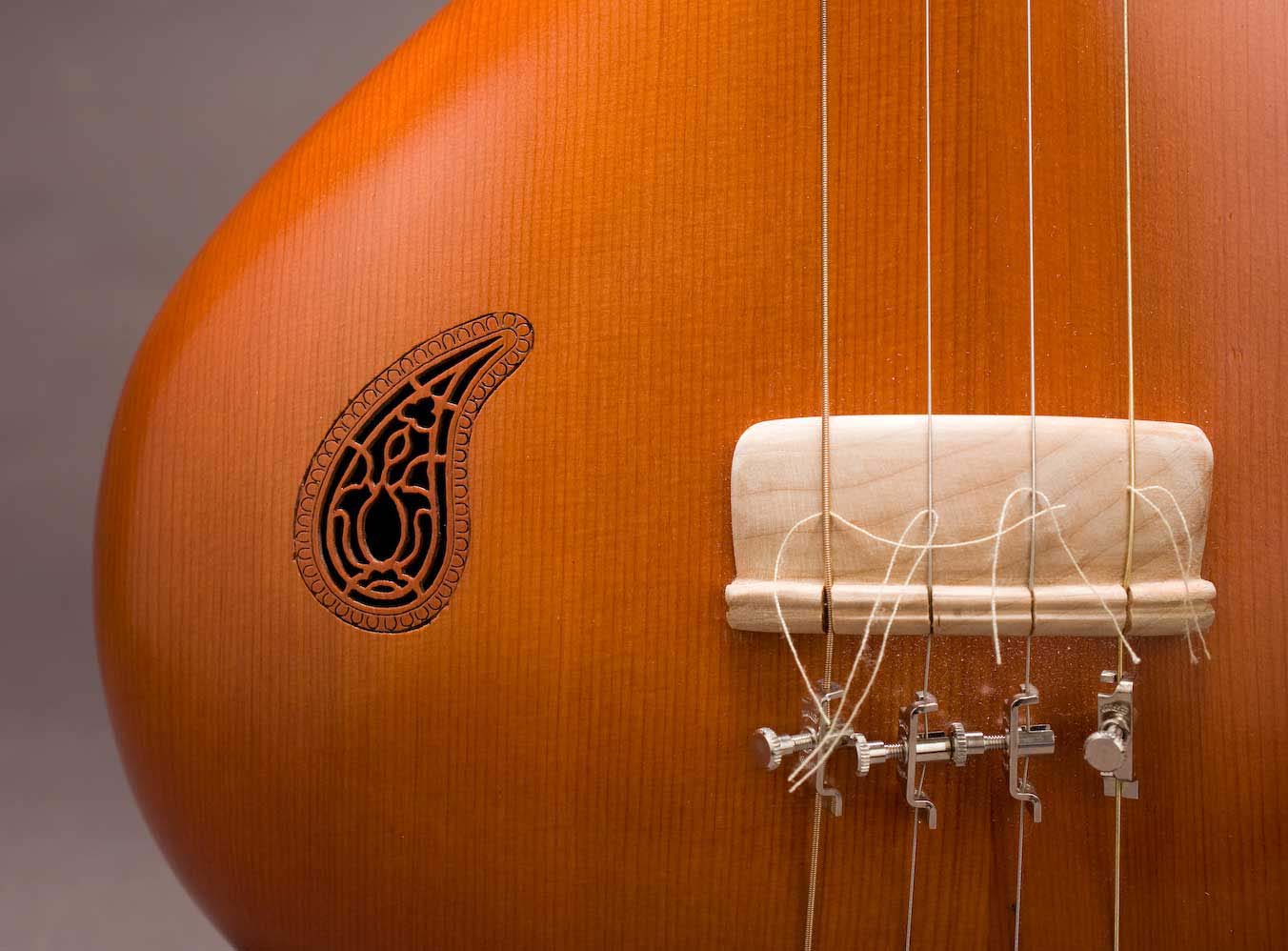
- Attention to detail – Particularly in the joinery and the finish.
- Playability – The instrument should respond willingly, perhaps even enthusiastically, to your touch. It is a living being.
Where does your creativity come from?
A jovial relationship with Vishwakarma.
An almost erotic relationship with Saraswati.
How do you combine tradition and innovation?
Combining tradition with innovation is walking a razors-edge.
Most “innovations” are not truly improvements on tradition… they are simply different ways of performing a task.
Building an instrument by punching a button on a CNC machine may be considered an “innovation”, but I do not believe it’s an improvement. On the other hand, using a table saw, or a drill press could be considered an innovation over an adz bow-drill but are so ubiquitous that those power tools could well be considered “traditional” now.
The word “combine” is crucial here. Accurate measurement (temperature, humidity, thickness, etc.) is an innovation worth combining with tradition. Using these tools to replace “feel” and intuition is not.
I have not built sitars as of yet (I cannot compete with the Rupee). I have some innovative designs for sitar, but the innovation is principally in design and less-so execution. The same principles I have used in building the “Personal Tambura” will be applied when the time comes.
What materials do you prefer to use and why?
For wood, Western Red Cedar. I like the cedar for its longevity and stability. The trees are quite large, so I can avail myself of beautiful clear quarter-sawn timbers. These timbers can vary quite a bit, sometimes specimens having much the qualities of old Burma Teak and others quite similar to traditional Cedrela Toona.
For finishes, water-bourn lacquer. I do a lot of work in the winter with the pot-belly going, so I avoid flammable liquids. I also don’t like working with high VOC solvents all that much. The water-bourn finishes I use still “burn-in” in much the same way as shellac, so I find them still quite suitable acoustically.
How do you collaborate with musicians?
Mostly on-line or via phone. It’s important to always be ready-and-willing to listen and chat as long as needed (sometimes longer). I have only a land-line at my shop, so this usually means sitting with my feet up on the workbench. I prefer that musicians come to the shop.
What project are you most proud of?
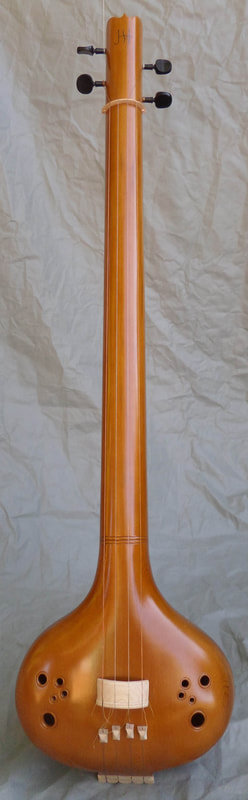
I am most fond of the “Personal Tambura”.
I have developed, over the years, a more “esoteric” relationship with the Music. Early-on I was very taken with the uniqueness and potency of the sound of the Tambura, but was not satisfied with the quality of instruments from India (other than Miraj). It seemed to be treated as just some kind of background filler.
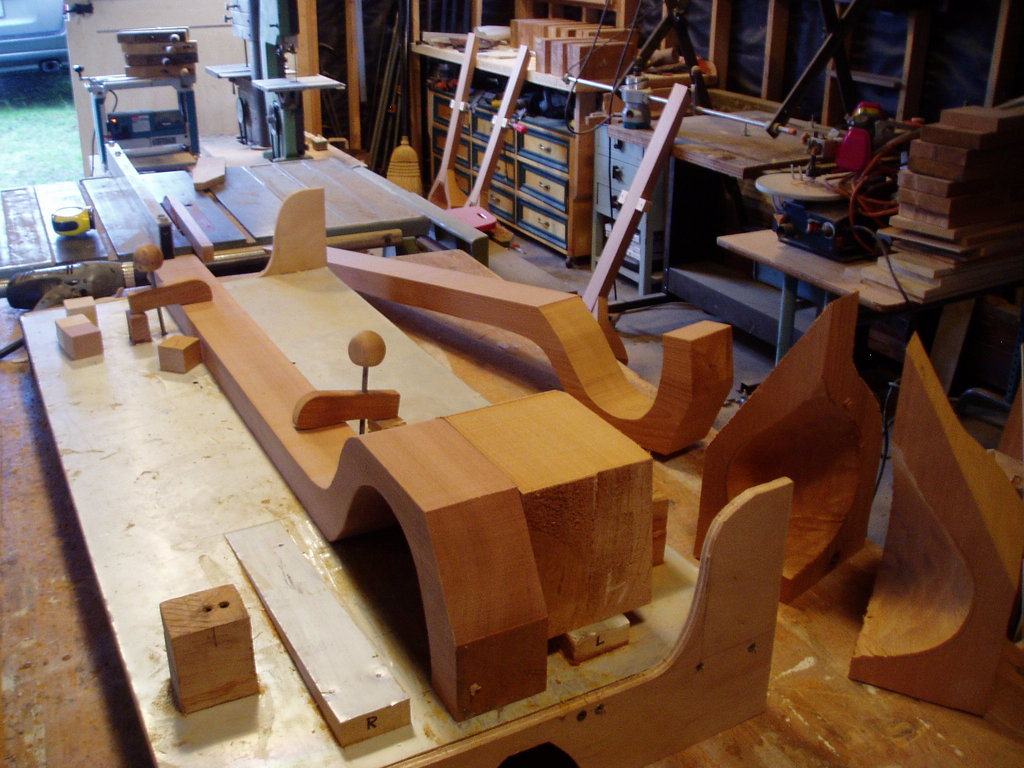
I felt the tambura did not get the same level of craft-respect and attention to acoustic integrity as the “solo” instruments in the foreground. There were lots of pretty tamburas, but not many really well-made ones. I also felt this instrument was important as a meditation tool.
So the quest to build a fine Tambura. I wanted it to be as traditional as possible, but better acoustically. I wanted a bass instrument, but portable. I wanted it made of high-quality material commensurate with a fine solo instrument. Among a few technical challenges, the major one was dealing with the neck/resonant body joint (gulu).
I wanted the entire instrument to be hollow, with no neck joint at all, yet carving from one large timber was not desirable. My solution was to have a “spine” running the full length from end-to-end, with suitable book-matched clear quarter-sawn blocks glued to each side and then carved.
The resulting instrument is light, has great resonance and volume with no neck joint.
What was your biggest challenge?
Most challenging:
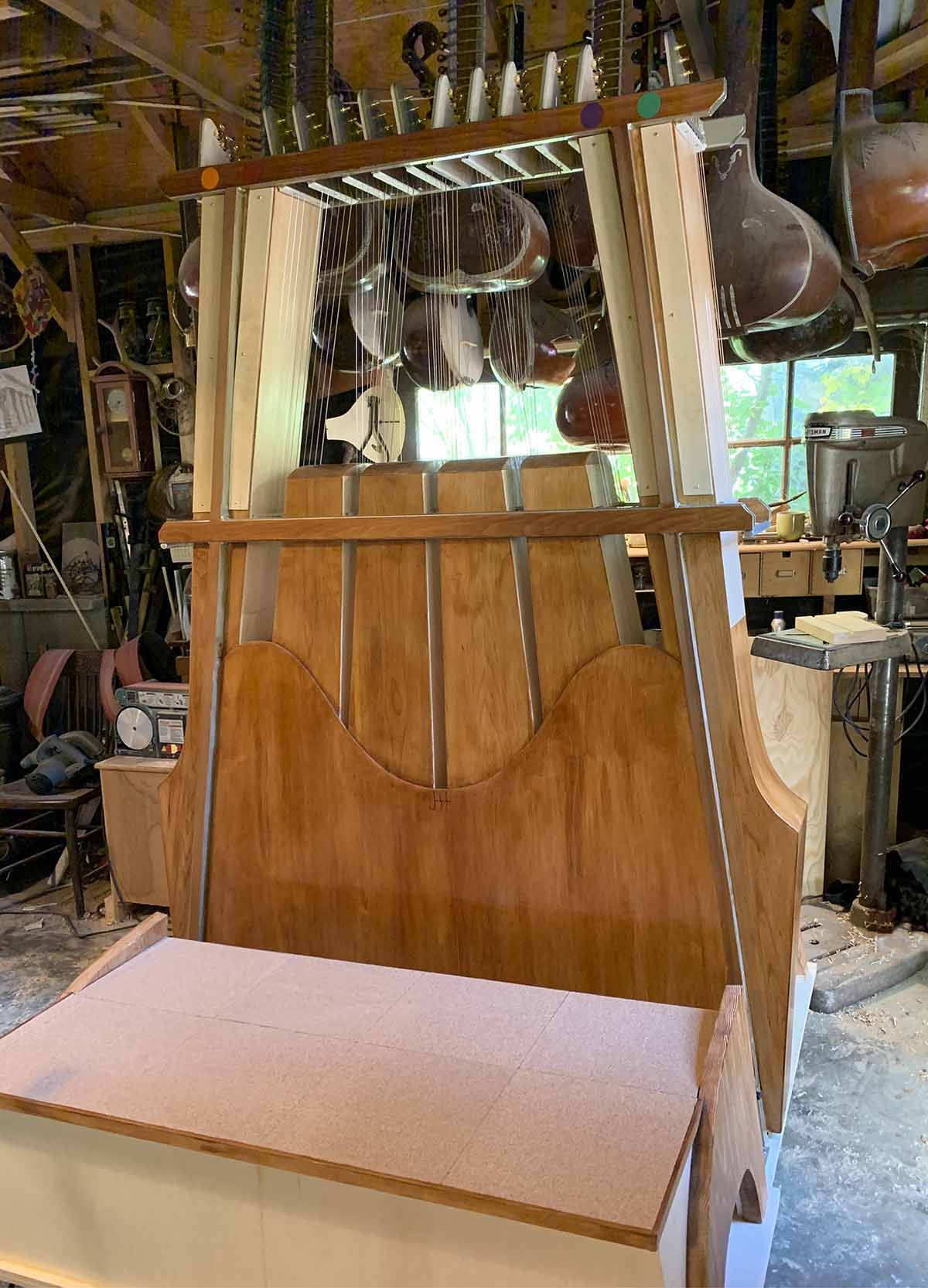
My re-design of the Harry Partch “Kithara II”. It is a rather large (90″ tall) instrument comprised of twelve sets of six strings strung over six double-sided zithers. You stand on it and reach inside to play it.
The original one (circa 1954) was quite fragile, unstable and not very loud for its size. I designed and built an aluminum “exoskeleton” to support the tension of all the strings so the zithers could be independent of the stress and be way louder and more acoustically responsive. It also looked pretty cool.
Most unusual:
My commission from Pir Vilayat Inayat Khan for what he called “Shiva’s Veena”. He literally wanted the (mythological?) veena of Shiva. This was like asking a tool-maker to make “Thor’s hammer”. He defined Shiva as an ancient Sadhu, so he imagined the veena to be quite “primitive”, but also very potent. A conjuring instrument used by a shaman/god.
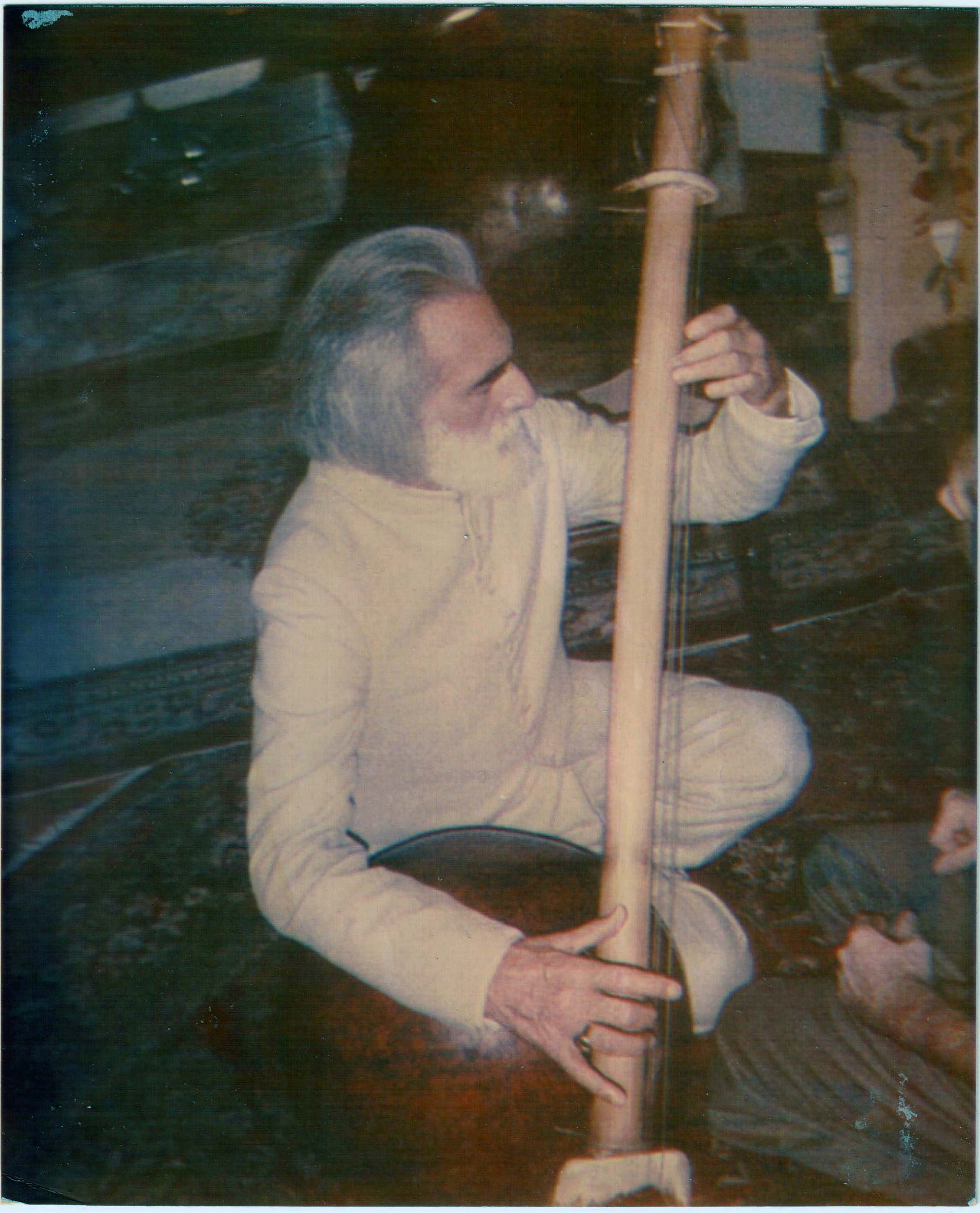
This took a few years of collaboration. I had a fairly close relationship with Pir Vilayat going back to when I was 16 years old (1968), so the collaboration for the veena was often candid and lasted 5 years (1987 through 1993). This made for a challenge both technically and emotionally. He told me he liked presenting me with a challenge.
What are your dreams for the future?
My dreams for the future involve refining the development of a technique using the Personal Tambura in a form of ‘active meditation’…music As yoga, not music For yoga. I also dream to improve the efficiency, comfort and dust-control of my shop without compromising its magic. The plans I have for the future of my work as a sitar maker is just that…make some sitars!
Quote From The Bench
Combining tradition with innovation is walking a razors-edge.
My Reflection
What strikes me most in Scott’s story is how naturally craftsmanship, music and a more spiritual understanding of the instrument come together.
There are many things in this interview that I recognise as a fellow instrument maker. You learn techniques, you measure, you experiment and you gradually become better at understanding wood, strings and acoustics. But after many years at the workbench, there is also something that becomes increasingly difficult to put into measurements. Experience becomes intuition. You begin to feel what an instrument needs.
I particularly like Scott’s description of combining tradition and innovation as “walking a razors-edge”. It is very easy to change an instrument; it is much harder to change it without losing what made it valuable in the first place. Innovation, to me, becomes interesting when it grows out of respect for the instrument rather than from a desire simply to make something different.
Scott’s Personal Tambura is a beautiful example of that approach. It is not an attempt to replace tradition, but to understand its principles deeply enough to develop them further.
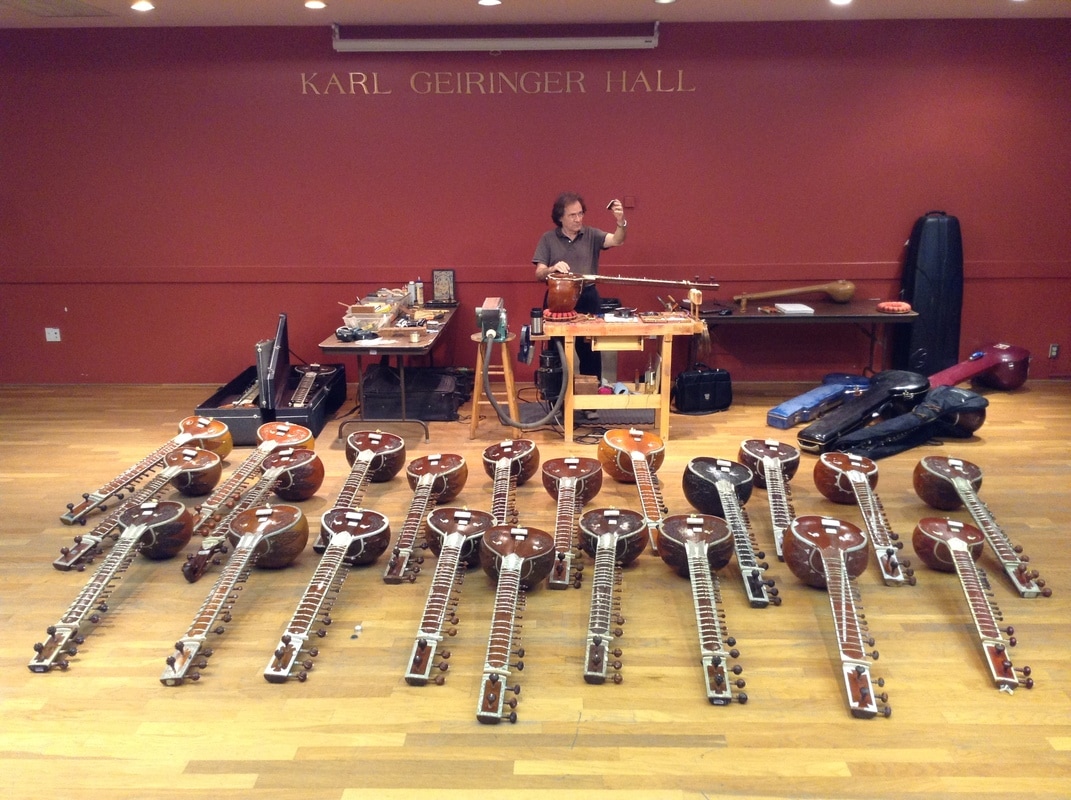
And perhaps that is what I appreciate most about Scott’s work: after more than fifty years, there is still curiosity. Still ideas to explore, instruments to improve and, apparently, some sitars still waiting to be built.
Discover More
Want to know more about the work of Scott Hackleman:
- Website: www.hacklemanshop.com
- SiTAR FAcToRY: Jay Scott Hackleman
- Guild of American Luthiers: Sitar making in India
And would you like to learn more about sitars and maintenance yourself? Feel free to take a look at SiTAR FAcToRY.
Next Episode
Coming soon in Meet the Maker: Tony Karasek, USA